
Foods That Improve Memory and Focus: Complete Guide
Discover the best foods that improve memory and focus — backed by neuroscience. A complete guide to brain nutrition that actually works for sharper thinking and recall.
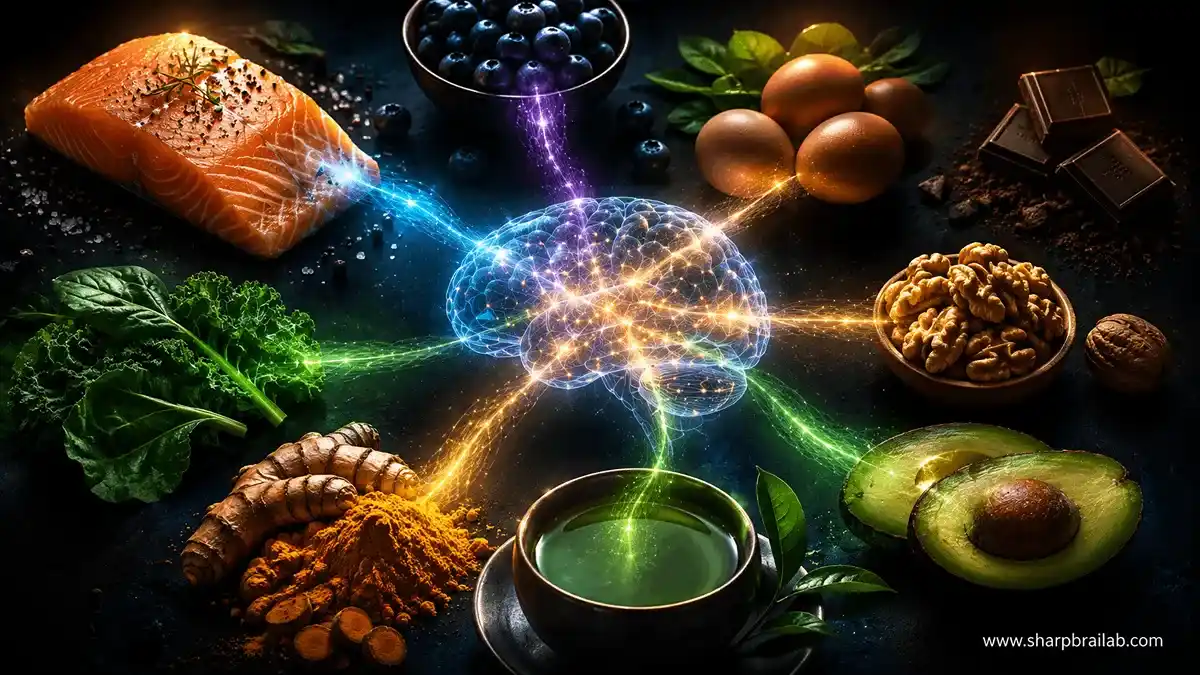
disclosure This article contains affiliate links. Purchases may earn us a commission at no extra cost to you. We only recommend products we've reviewed.
featured in this review
The Memory Wave
A targeted audio program that stimulates your brain's memory center using Theta wave technology. Specifically designed for adults over 40 who want sharper recall and clearer thinking.
Foods That Improve Memory and Focus: The Complete Brain Nutrition Guide
Your brain is hungry.
Not metaphorically — literally. Your brain consumes
approximately 20% of your body's total caloric intake
despite accounting for only 2% of your body weight.
Every thought you think, every memory you form, every
decision you make — all of it requires fuel. And the
quality of that fuel directly determines the quality
of the output.
The food you eat does not simply power your brain.
It builds it. Repairs it. Protects it. And in ways
that neuroscience is only beginning to fully understand
— it shapes how well you think, remember, and focus
for years and decades to come.
This guide covers the foods with the strongest
scientific evidence for improving memory and focus —
and explains exactly why they work.
Quick Answer
What are the best foods to improve memory and focus?
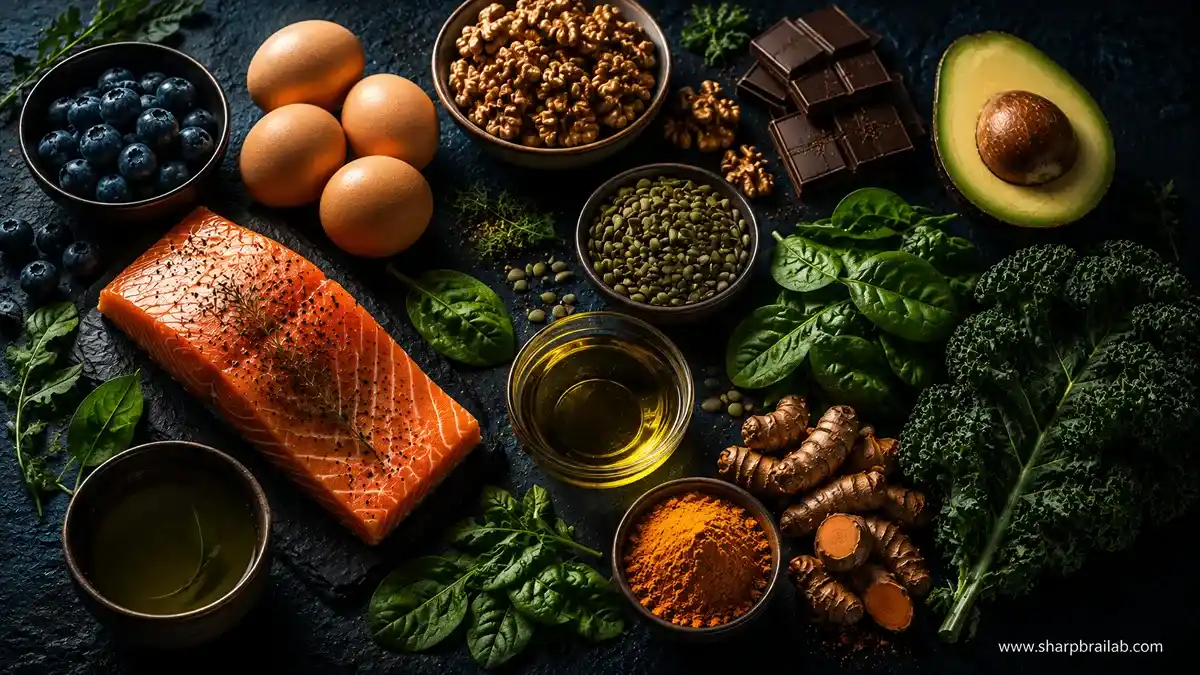
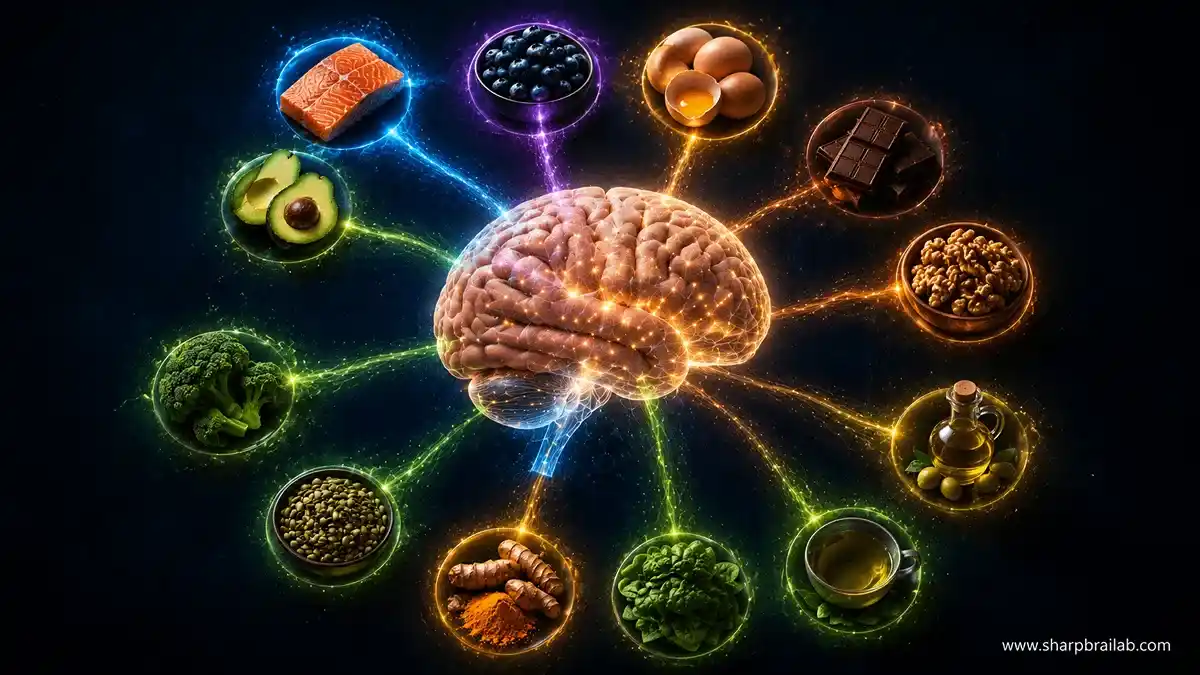
The foods with the strongest scientific evidence for
cognitive enhancement include fatty fish (Omega-3 DHA),
blueberries (flavonoids and antioxidants), eggs (choline
for acetylcholine synthesis), dark chocolate (flavanols
and caffeine), walnuts (DHA and antioxidants), avocados
(healthy fats and vitamin K), turmeric (curcumin and
neuroplasticity), leafy greens (vitamin K and folate),
pumpkin seeds (magnesium and zinc), and green tea
(L-Theanine and EGCG). Each supports different aspects
of brain function — from memory formation to sustained
focus and long-term neuroprotection.
How Food Affects Your Brain — The Neuroscience
Before exploring specific foods, understanding the
mechanisms through which nutrition influences cognition
makes the evidence significantly more compelling.
The Blood-Brain Barrier
The brain has a highly selective filtering system —
the blood-brain barrier — that controls which substances
enter the brain from the bloodstream. Many nutrients
cross this barrier and directly influence brain chemistry,
structure, and function.
Understanding which nutrients cross the barrier and how
they affect the brain explains why specific foods have
measurable cognitive effects — and others do not.
Neuroplasticity and BDNF
Neuroplasticity — the brain's ability to form new
connections and adapt its structure — is the biological
foundation of learning, memory, and cognitive resilience.
The primary regulator of neuroplasticity is BDNF —
Brain-Derived Neurotrophic Factor. BDNF promotes the
growth of new neurons, strengthens existing connections,
and supports hippocampal volume — the brain region
most directly involved in memory formation.
Specific foods measurably increase BDNF production.
This is one of the most compelling mechanisms through
which diet influences long-term cognitive health.
Neurotransmitter Synthesis
The brain's chemical messengers — dopamine, serotonin,
acetylcholine, GABA — are synthesised from dietary
precursors. What you eat directly determines how well
your brain can produce and maintain the neurotransmitters
that focus, memory, and mood depend on.
Inflammation — The Silent Cognitive Disruptor
Chronic neuroinflammation — brain inflammation driven
by diet, stress, and environmental factors — is
increasingly recognised as a primary driver of cognitive
decline, brain fog, and reduced mental performance.
Anti-inflammatory foods that cross the blood-brain
barrier and reduce neuroinflammation are among the most
impactful dietary interventions for cognitive health.
The 12 Best Foods for Memory and Focus
1. Fatty Fish — The Most Evidence-Backed Brain Food
Salmon, sardines, mackerel, herring, and trout are the
richest dietary sources of Omega-3 DHA — the most
important nutrient for brain structure and function.
DHA comprises approximately 30% of the brain's grey matter.
It is the primary structural fat in neuronal cell membranes
and synaptic connections — the physical structures through
which all brain communication occurs.
Adequate DHA directly supports:
- Memory formation and recall through hippocampal health
- Processing speed through improved neural signal transmission
- Mood regulation through serotonin receptor function
- Long-term neuroprotection against cognitive decline
Research consistently shows that people with higher
blood DHA levels perform better on memory and cognitive
tests — and that populations with higher fish consumption
show lower rates of cognitive decline and dementia.
How much: Two to three servings of fatty fish per
week provides approximately the optimal dietary DHA intake.
For those who do not eat fish — algae-based Omega-3
supplements provide DHA from the same source that fish
obtain it from.
2. Blueberries — The Memory Berry
Blueberries have one of the strongest research profiles
of any food for cognitive enhancement — particularly
for memory.
The active compounds — anthocyanins and flavonoids —
cross the blood-brain barrier and accumulate in the
hippocampus, where they:
- Reduce neuroinflammation directly
- Increase BDNF production — supporting hippocampal
neuroplasticity
- Improve communication between brain cells
- Protect neurons from oxidative stress
A landmark study at the University of Cincinnati found
that older adults with mild cognitive impairment who
consumed wild blueberry powder daily for 16 weeks showed
significant improvements in memory performance compared
to placebo — with brain imaging showing increased
hippocampal activation.
How much: Half a cup to one cup daily — fresh, frozen,
or freeze-dried. Frozen blueberries retain their
anthocyanin content as effectively as fresh.
3. Eggs — The Choline Source
Eggs are the richest dietary source of choline — the
precursor to acetylcholine, the neurotransmitter most
directly involved in memory formation, attention, and
cognitive speed.
Choline deficiency is surprisingly common — particularly
among adults over 50 — and directly linked to impaired
memory and reduced cognitive performance. The brain
requires a continuous supply of choline to maintain
acetylcholine synthesis.
Beyond choline, eggs contain Vitamin B12 (essential for
myelin integrity and neural signal transmission speed),
Vitamin D (important for cognitive function and mood),
and lutein (linked to improved cognitive function in
older adults).
How much: Two to three eggs daily provides a
substantial proportion of optimal choline intake.
The concern about dietary cholesterol from eggs has
been largely revised by current research — for most
healthy adults, eggs are an excellent brain food with
no significant cardiovascular risk.
4. Dark Chocolate — The Pleasure Brain Food
Dark chocolate (70% cocoa or higher) contains two
categories of brain-active compounds:
Flavanols — plant compounds that increase cerebral
blood flow, delivering more oxygen and glucose to
brain cells. Research has demonstrated improved attention,
processing speed, and working memory with regular dark
chocolate consumption.
Caffeine and Theobromine — mild stimulants that
increase alertness and focus duration without the
anxiety of higher caffeine doses.
A 2018 study published in FASEB Journal found that
consuming dark chocolate increased gamma frequency brain
activity — associated with memory, learning, and
processing — more than milk chocolate or control.
How much: 25-40g of 70%+ dark chocolate daily.
Higher cocoa percentage means higher flavanol content
and lower sugar — the trade-off is worthwhile for
cognitive benefits.
5. Walnuts — The Brain-Shaped Superfood
Walnuts are the only tree nut with significant Omega-3
content — specifically ALA, which the body partially
converts to DHA. They also contain Vitamin E
(a potent neuroprotective antioxidant), polyphenols
that reduce neuroinflammation, and melatonin precursors
that support sleep and memory consolidation.
Research has linked regular walnut consumption to
improved cognitive function, better memory performance,
and reduced rates of cognitive decline in aging populations.
How much: A small handful (approximately 28g or
7 whole walnuts) daily provides significant brain-
protective benefits.
6. Avocados — The Healthy Fat Brain Food
Avocados are rich in monounsaturated fatty acids that
support healthy cerebral blood flow, Vitamin K which
may help prevent brain cell death and improve cognitive
function, and folate which reduces homocysteine —
an amino acid linked to cognitive decline at elevated levels.
Research from Tufts University found that avocado
consumption was associated with improved sustained
attention, working memory, and problem-solving ability —
with effects particularly pronounced in older adults.
How much: Half to one avocado daily, as part of
a balanced diet.
7. Turmeric — The Anti-Inflammatory Brain Spice
Curcumin — the active compound in turmeric — is one
of the most studied natural compounds for brain health,
with a remarkable range of cognitive effects:
- Crosses the blood-brain barrier and reduces
neuroinflammation directly
- Boosts BDNF production — supporting hippocampal
neuroplasticity and memory
- Clears amyloid plaques — the protein deposits
associated with Alzheimer's disease
- Acts as a powerful antioxidant protecting neurons
from oxidative damage
Research from UCLA found that older adults with mild
memory complaints who took curcumin supplements for
18 months showed significant improvements in memory
and attention — alongside measurable reductions in
amyloid and tau proteins in brain imaging.
Important note: Curcumin has poor bioavailability
on its own. Combining with black pepper (piperine)
increases absorption by up to 2000%. Using turmeric
with healthy fat also significantly increases absorption.
How much: 1-2 teaspoons of turmeric daily in food,
combined with black pepper. Or curcumin supplements
with piperine for more consistent dosing.
8. Leafy Greens — The Cognitive Longevity Foods
Spinach, kale, broccoli, and other leafy greens contain
a powerful combination of brain-protective nutrients:
Vitamin K — essential for sphingolipid synthesis,
a class of fats found in high concentrations in brain
cell membranes that are directly involved in cognition.
Folate — reduces homocysteine levels and supports
the methylation processes that brain cell maintenance
depends on.
Lutein — a carotenoid that accumulates in the brain
and is linked to preserved cognitive function in aging.
Beta-carotene and antioxidants — protect brain
cells from the oxidative stress that accumulates with
age and chronic stress.
Research from Rush University Medical Centre found
that older adults who consumed one to two servings of
leafy greens daily had cognitive performance equivalent
to being 11 years younger than those who consumed none.
How much: One to two servings daily — cooked or raw.
9. Pumpkin Seeds — The Micronutrient Brain Food
Pumpkin seeds are an exceptional source of several
micronutrients directly involved in cognitive function:
Magnesium — essential for synaptic plasticity,
the biological mechanism of memory formation. Magnesium
deficiency is directly linked to poor memory and
increased anxiety.
Zinc — critical for nerve signalling and memory.
Zinc deficiency is associated with impaired learning
and memory.
Iron — essential for oxygen transport to the brain.
Even mild iron deficiency produces measurable cognitive
impairment.
Copper — involved in the regulation of neural
pathways and energy metabolism in the brain.
How much: A small handful (approximately 30g) daily.
10. Green Tea — The Focus Drink
Green tea provides two complementary cognitive compounds
that work synergistically:
L-Theanine — promotes Alpha brain wave activity,
producing calm, relaxed alertness without sedation.
Directly supports sustained focus without the anxiety
that caffeine alone can produce.
EGCG (Epigallocatechin Gallate) — a potent
antioxidant that crosses the blood-brain barrier,
reduces neuroinflammation, and supports BDNF production.
The combination of L-Theanine and caffeine in green
tea is one of the most consistently studied cognitive
enhancement combinations — producing improvements in
attention, processing speed, and working memory
across multiple randomised controlled trials.
How much: Two to four cups of high-quality green
tea daily. Matcha provides significantly higher L-Theanine
and EGCG content than standard green tea.
11. Extra Virgin Olive Oil — The Mediterranean Brain Protector
Extra virgin olive oil is the cornerstone of the
Mediterranean diet — one of the most extensively
studied dietary patterns for cognitive health and
dementia prevention.
Its primary active compound — oleocanthal — has been
shown to help clear amyloid beta plaques from the brain
and reduce neuroinflammation. Studies suggest it may
activate the brain's waste clearance system — the same
glymphatic system that operates during deep sleep.
How much: Two to four tablespoons daily as the
primary cooking fat and in salad dressings.
12. Berries — Beyond Blueberries
While blueberries have the strongest research profile,
other berries — strawberries, blackberries, raspberries,
and cherries — contain similar anthocyanins and
flavonoids with comparable brain-protective effects.
Red tart cherries are particularly notable — containing
natural melatonin precursors and anti-inflammatory
compounds that support both sleep quality and cognitive
health. They are one of the key ingredients in YuSleep
for exactly this reason.
How much: Half a cup to one cup of mixed berries
daily — fresh or frozen.
The Foods to Reduce or Avoid for Brain Health
Brain nutrition is as much about what to reduce as
what to add:
Ultra-processed foods — produce chronic neuroinflammation
through advanced glycation end-products and inflammatory
fatty acid profiles. Linked to accelerated cognitive decline.
High-glycaemic carbohydrates — produce blood sugar
spikes and crashes that create cognitive performance
fluctuations and, over time, insulin resistance that
directly impairs brain function.
Trans fats — associated with neuroinflammation and
reduced cognitive performance. Largely removed from
food supplies but still present in some processed products.
Excess alcohol — directly toxic to neurons at
sustained high consumption. Disrupts sleep architecture,
memory consolidation, and thiamine absorption — an
essential B vitamin for brain function.
When Food Is Not Enough — Targeted Supplementation
Even an optimally designed brain nutrition diet may
not provide all the nutrients your brain needs at
optimal levels — particularly for adults over 40,
those under significant cognitive stress, or those
with specific absorption challenges.
The Memory Wave uses Theta wave audio technology
to directly stimulate the hippocampus — supporting
the memory formation and consolidation processes
that dietary nutrition makes possible but cannot
fully activate alone.
Pineal Guardian X provides targeted nutritional
support for brain health — including Lion's Mane
Mushroom, Bacopa Monnieri, and Ginkgo Biloba — compounds
with strong evidence for memory and cognitive function
that are difficult to obtain in meaningful quantities
through diet alone.
Together, optimal brain nutrition and targeted
supplementation address both the dietary foundation
and the specific cognitive support that demanding
modern life requires.

Key Takeaways
✓ The brain consumes 20% of total caloric intake —
what you eat directly builds, repairs, and fuels
cognitive performance
✓ Fatty fish provides DHA — the most important
structural fat for brain cell membranes, memory,
and processing speed
✓ Blueberries increase BDNF and hippocampal activity —
one of the most evidence-backed foods for memory
improvement specifically
✓ Eggs provide choline — the precursor to acetylcholine,
the neurotransmitter most directly involved in
memory formation and attention
✓ Turmeric's curcumin reduces neuroinflammation and
boosts BDNF — but requires black pepper for
adequate bioavailability
✓ Anti-inflammatory brain nutrition combined with
targeted supplementation provides comprehensive
cognitive support that diet alone cannot achieve
If you are already eating well but want to support
your memory and focus further, you may find The Memory
Wave and Pineal Guardian X useful additions to a
brain-healthy nutritional foundation.
You may also be interested in our complete guide on
how to improve memory naturally alongside the
nutritional strategies described here.
Frequently Asked Questions
What is the single best food for memory?
Fatty fish — particularly salmon and sardines — has
the strongest overall research evidence for memory
improvement, primarily through Omega-3 DHA content.
Blueberries have the most specific evidence for
hippocampal memory enhancement through anthocyanin
and flavonoid content.
How quickly do brain foods improve memory?
Some effects — particularly from L-Theanine in green
tea and flavanols in dark chocolate — are noticeable
within 1-2 hours of consumption. Structural improvements
from consistent DHA intake typically require 4-8 weeks.
Curcumin's memory benefits in research studies are
typically measured over 12-18 weeks of consistent use.
Can diet alone prevent memory decline?
Diet is a powerful protective factor but not sufficient
alone. Sleep quality, physical exercise, stress
management, and cognitive engagement all contribute
independently and synergistically. Diet provides the
nutritional foundation — other interventions maximise
its effect.
Are supplements better than food for brain health?
Whole foods provide complex combinations of nutrients,
fibre, and phytochemicals that supplements cannot
fully replicate. However, specific supplements provide
nutrients at doses and in forms that are difficult to
achieve through diet — particularly for adults over 40
with higher cognitive demands. The most effective
approach combines optimal nutrition with targeted
supplementation.
Is caffeine good for memory and focus?
Caffeine provides measurable improvements in alertness,
attention, and short-term memory performance — but
with tolerance, dependency, and sleep quality trade-offs
at higher doses. Combined with L-Theanine (as in green
tea), the cognitive benefits are maintained while the
anxiety and sleep disruption are significantly reduced.
Related Guides
→ How to Improve Memory Naturally — Complete Guide
→ Why Is My Memory Getting Worse? Causes and Solutions
→ The Memory Wave Review — Complete Independent Review
→ Pineal Guardian X Review — Brain Health Supplement
→ How to Sleep Better for Brain Health — Complete Guide
Medical Disclaimer
This article is educational and does not replace
professional medical advice. If you are experiencing
significant cognitive decline, memory problems, or
neurological symptoms — consult a qualified healthcare
professional for proper evaluation and guidance.
Always discuss significant dietary changes or new
supplements with your doctor, particularly if you
take prescription medications.
TL;DR
- Main insight: Brain nutrition is not supplementary
to cognitive performance — it is foundational.
What you eat builds the structures that memory
and focus depend on
- Top foods: Fatty fish, blueberries, eggs, dark
chocolate, walnuts, avocado, turmeric, leafy
greens, pumpkin seeds, green tea, olive oil, berries
- When food is not enough: The Memory Wave and
Pineal Guardian X provide targeted cognitive
support beyond what diet alone can achieve
- Next step: Add two brain foods you are not
currently eating regularly — start with fatty fish
and blueberries for the strongest combined effect
This content is based on information from:
- PubMed peer-reviewed nutritional neuroscience research
- NIH National Institute on Aging dietary guidelines
- Harvard T.H. Chan School of Public Health nutrition research
- Rush University Medical Centre cognitive ageing studies
- UCLA research on curcumin and cognitive function
Last updated: 24 July 2026
References
1. Devore EE, et al. (2012). Dietary intakes of berries
and flavonoids in relation to cognitive decline.
Ann Neurol. 72(1):135-43.
2. Morris MC, et al. (2018). Nutrients and bioactives
in green leafy vegetables and cognitive decline.
Neurology. 90(3):e214-e222.
3. Small GW, et al. (2018). Memory and Brain Amyloid
and Tau Effects of a Bioavailable Form of Curcumin.
Am J Geriatr Psychiatry. 26(3):266-277.
4. Loef M, Walach H. (2012). The omega-6/omega-3 ratio
and dementia or cognitive decline. Invest Ophthalmol
Vis Sci. 53(4):2105.
5. Zamroziewicz MK, et al. (2017). Nutritional status,
brain network organization, and general intelligence.
NeuroImage. 161:241-250.
recomendado
Brain Audio Programs
Audio Brain Programs
A 7-minute daily audio that uses neuroscience-backed sound frequencies to sharpen focus, boost memory, and unlock your brain's full potential. Used by 80,000+ people worldwide.
Sleep Optimization
YuSleep
Recommended for adults who struggle with falling asleep, waking up at 3 AM, or waking up tired even after a full night's sleep. YuSleep combines clinically studied ingredients that support deeper, more restorative sleep without creating dependency.
Brain Audio Programs
The Genius Switch
Neuroscience-backed audio that activates your brain's peak performance mode in minutes. One of the highest-converting brain programs available — thousands of professionals use it daily.
Tinnitus Relief
NeuroTinn
Natural sound therapy program designed to help reduce tinnitus perception, promote relaxation, and improve sleep without medication.
Brain Supplements
Pineal Guardian X
A premium natural brain health supplement designed to support memory, mental clarity, focus, and long-term cognitive performance with a carefully selected blend of plant-based ingredients.