
How to Get Into Flow State Fast: The Science of Peak Mental Performance
Flow state isn't luck. Discover what actually happens in your brain during peak performance, why it's so hard to access on demand, and evidence-informed ways to get there faster.
disclosure This article contains affiliate links. Purchases may earn us a commission at no extra cost to you. We only recommend products we've reviewed.
featured in this review
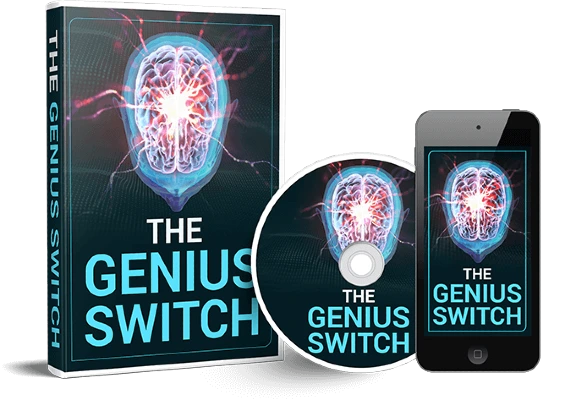
The Genius Switch
Neuroscience-backed audio that activates your brain's peak performance mode in minutes. One of the highest-converting brain programs available — thousands of professionals use it daily.
How to Get Into Flow State Fast: The Science of Peak Mental Performance
You know the feeling when it happens.
Time disappears. The work stops feeling like effort. Ideas connect faster than you can write them down. An hour passes and it feels like ten minutes. Then the next day, doing the exact same task, none of it comes — every sentence is a fight, every decision takes forever, and you spend more energy resisting the work than actually doing it.
That first state has a name: flow. And the frustrating part isn't that it exists — it's that most people can't choose when it shows up. This guide looks at what flow state actually is neurologically, why it's so inconsistent, and what the evidence says about triggering it on demand rather than waiting for it to happen by chance.
What Flow State Actually Is
The term "flow" was coined by psychologist Mihaly Csikszentmihalyi, who spent decades studying people during peak performance — athletes, musicians, surgeons, chess players — and found a consistent psychological profile across all of them: complete absorption in the task, a merging of action and awareness, distorted time perception, and a loss of self-consciousness. Performance in this state isn't just more enjoyable — it's measurably better, because the usual mental friction of self-monitoring and doubt drops away.
Csikszentmihalyi identified three conditions that reliably precede flow: a clear goal, immediate feedback on progress toward that goal, and a challenge level that closely matches your current skill — difficult enough to require full attention, not so difficult that it triggers anxiety.
What Happens in the Brain During Flow
For a long time, flow was treated as a purely subjective, unmeasurable experience. That has changed. Two lines of neuroscience research help explain what's actually happening.
The first is the transient hypofrontality hypothesis, proposed by cognitive neuroscientist Arne Dietrich. It suggests that flow states involve a temporary down-regulation of activity in parts of the prefrontal cortex — specifically the regions responsible for self-monitoring, explicit analytical reasoning, and time perception. In plain terms: the part of your brain that second-guesses you, tracks the clock, and interrupts you with "is this good enough?" goes quiet. That's why flow feels effortless and why time seems to vanish — the neural machinery that tracks both is temporarily offline.
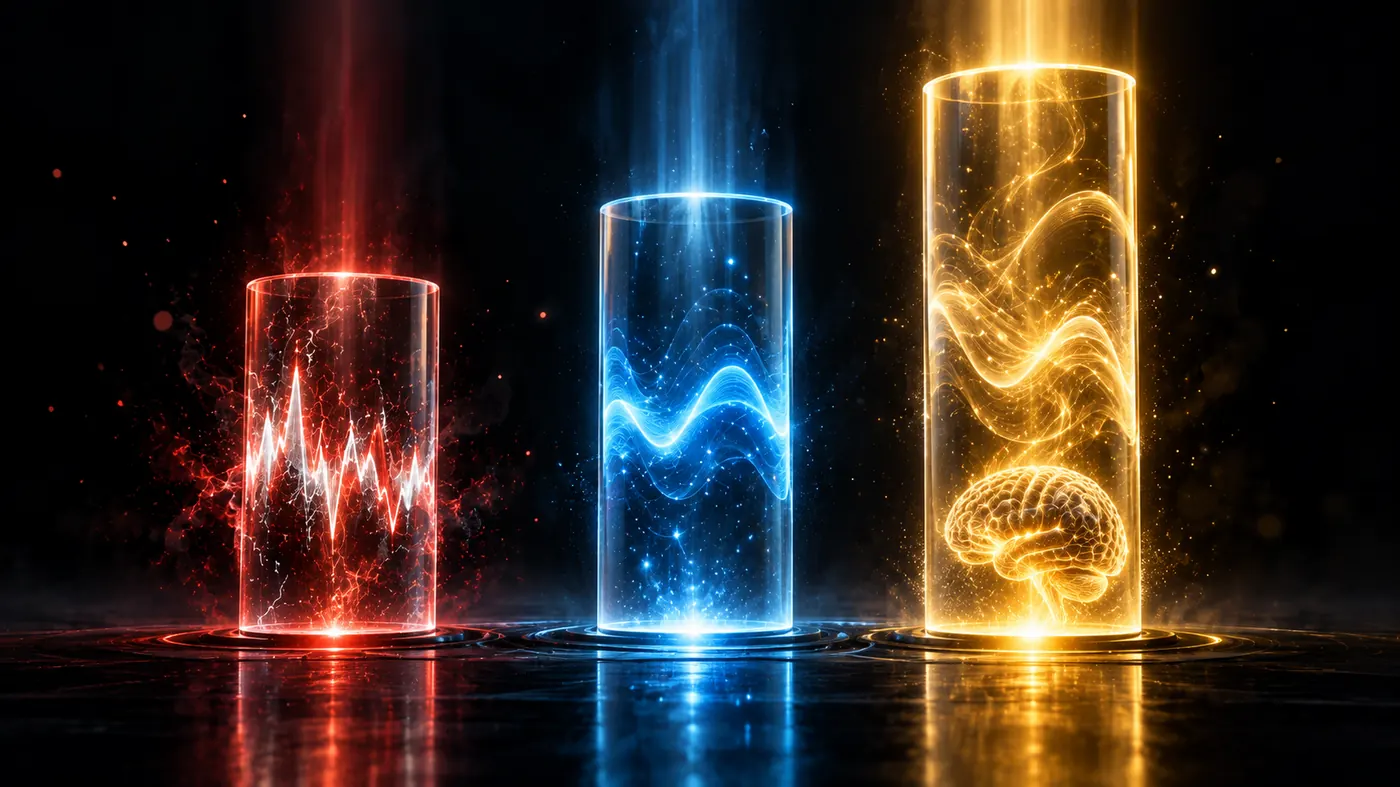
The second is direct EEG evidence. A 2018 study measuring brain activity during a demanding cognitive task found that flow states are marked by a specific, measurable signature: increased theta activity in the frontal areas of the brain, combined with moderate — not excessive — alpha activity in the frontal and central regions. The researchers interpreted the elevated theta as reflecting deep cognitive control and immersion in the task, while the moderate alpha suggested working memory wasn't being overloaded (see References below). This matters because it means flow isn't a vague feeling — it corresponds to an identifiable brain-wave pattern that sits between relaxed alpha and effortful, stressed beta.
Why Flow Is So Hard to Access on Demand
If the brain state behind flow is identifiable, why can't most people just switch it on?
The Default State Is the Wrong One
Most modern work happens under mild chronic stress — deadlines, notifications, open tabs, background anxiety. That keeps the brain biased toward high-frequency Beta activity: alert, reactive, but not the calm-focused Alpha/Theta blend that flow research associates with peak performance. Getting into flow from a stressed Beta baseline isn't just difficult, it's working against the direction your brain is already leaning.
Task-Switching Resets the Climb
Flow builds gradually — attention has to narrow and settle before the state deepens. Every interruption forces that process to restart. Research on interrupted work has consistently found that returning to a demanding task after an interruption takes meaningfully longer to reach the same depth of focus than working on it continuously, even when the interruption itself is brief (see References below). A notification doesn't just cost the ten seconds it takes to glance at it — it costs the climb back to where you were.
The Challenge-Skill Balance Is Rarely Right
Too easy, and the brain disengages — you drift, check your phone, lose the thread. Too hard, and the brain shifts into anxious problem-solving mode, which is a different, more effortful state than flow. Most people don't deliberately calibrate their task difficulty at all, so they land in flow by accident rather than by design.
6 Evidence-Informed Ways to Get Into Flow Faster
1. Define One Clear, Immediate Goal Before You Start
Vague intentions like "work on the report" keep the brain in planning mode. A specific, immediately actionable goal — "write the three bullet points for section two" — gives the brain the clear target and feedback loop that Csikszentmihalyi identified as a precondition for flow.
2. Calibrate the Difficulty Before You Begin
If the task is too easy, add a constraint — a tighter deadline, a higher quality bar. If it feels overwhelming, break it into a smaller first step that's clearly within reach. The goal is landing just above your current comfort level, not below it and not far above it.
3. Remove the Interruption Sources Before You Start, Not During
Because task-switching resets the climb into flow, the highest-leverage moment to manage distraction is before you begin, not mid-task. Phone in another room, notifications off, browser tabs closed — decided once, in advance, rather than negotiated in the moment.
4. Use a Consistent Pre-Work Ritual
Elite performers across sport and music rarely rely on willpower alone to enter a focused state — they use a consistent pre-performance routine that cues the brain: this is the moment to focus. The specific ritual matters less than its consistency; repetition is what turns it into a reliable trigger rather than a hopeful ritual.
5. Prime the Brain-Wave Shift With Audio Before Demanding Work
Since flow correlates with a specific shift away from stressed Beta activity toward a Theta/Alpha blend, one practical lever is helping the brain make that shift before the work starts, rather than waiting for it to happen naturally. This is the mechanism behind audio-based brain training tools like The Genius Switch, which uses engineered binaural beat audio designed to guide the brain toward the frequency ranges associated with focused, absorbed states.
It's worth being precise about what the research actually shows here. A 2013 study on binaural beats and creativity found that the effect isn't universal — it depends on an individual's baseline dopamine activity, and benefited some participants more than others (see References below). A separate meta-analysis of binaural beat research found consistent, modest effects on cognitive performance and anxiety reduction across studies (see References below). The honest takeaway: audio brain-state priming is a legitimate, evidence-supported lever — not a guaranteed switch that works identically for everyone.

6. Protect an Uninterrupted Block, Not Just a Quiet Room
A quiet room with an unlocked phone isn't protected time. Flow needs a block where interruption is structurally impossible for a defined period, not just unlikely.
How Long Does It Actually Take to Enter Flow?
There's no universally agreed-upon number, and claims of an exact minute count should be treated with some skepticism. What the flow literature does consistently describe is a ramp-up period — flow rarely arrives in the first minute of a task. It tends to build over the initial stretch of focused, uninterrupted effort as attention narrows and the challenge-skill balance settles. This is precisely why the interventions above — a clear goal, calibrated difficulty, and removing interruptions before starting — matter more than any single trick: they shorten that ramp-up window rather than eliminating it.
Frequently Asked Questions
Is flow state the same as just being focused?
Related but not identical. Ordinary focus can still feel effortful. Flow specifically involves the drop in self-monitoring and time perception described by the transient hypofrontality hypothesis — it feels qualitatively different, not just more intense.
Can everyone learn to access flow more reliably?
The conditions that precede flow — clear goals, matched challenge, uninterrupted time — are learnable and controllable by anyone, even if individual sensitivity to specific tools like audio brain-state priming varies from person to person.
Is The Genius Switch a guaranteed way to trigger flow?
No single tool guarantees flow — it depends on multiple conditions working together. The Genius Switch is designed to support one piece of the puzzle, the brain-wave shift, and works best combined with a clear goal and a genuinely uninterrupted block of time.
Is there a money-back guarantee?
Yes — The Genius Switch comes with a 60-day money-back guarantee.
Related Guides
Looking for more resources on cognitive performance and brain health?
→ How to Think Faster and Clearer: Science-Backed Guide
→ How to Improve Concentration — 8 Science-Backed Methods
→ Can't Focus at Work? Why It Happens and How to Fix It
→ The Genius Switch Review — Complete Independent Review
This content is based on information from:
- Peer-reviewed research on the neuroscience of flow states and altered states of consciousness
- Peer-reviewed research on binaural beats, creativity, and cognitive performance
Last updated: 8 September 2026
References
1. Csikszentmihalyi M. (1990). Flow: The Psychology of Optimal Experience. Harper & Row.
2. Dietrich A. (2003). Functional neuroanatomy of altered states of consciousness: the transient hypofrontality hypothesis. Consciousness and Cognition. 12(2):231-256.
3. Katahira K, Yamazaki Y, Yamaoka C, Ozaki H, Nakagawa S, Nagata N. (2018). EEG correlates of the flow state: a combination of increased frontal theta and moderate frontocentral alpha rhythm in the mental arithmetic task. Frontiers in Psychology. 9:300.
4. Mark G, Gudith D, Klocke U. (2008). The cost of interrupted work: more speed and stress. Proceedings of CHI 2008, 107-110.
5. Reedijk SA, Bolders A, Hommel B. (2013). The impact of binaural beats on creativity. Frontiers in Human Neuroscience. 7:786.
6. Garcia-Argibay M, Santed MA, Reales JM. (2019). Efficacy of binaural auditory beats in cognition, anxiety, and pain perception: a meta-analysis. Psychological Research.
recomendado
Brain Audio Programs
Audio Brain Programs
A 7-minute daily audio that uses neuroscience-backed sound frequencies to sharpen focus, boost memory, and unlock your brain's full potential. Used by 80,000+ people worldwide.
Brain Audio Programs
The Memory Wave
A targeted audio program that stimulates your brain's memory center using Theta wave technology. Specifically designed for adults over 40 who want sharper recall and clearer thinking.
Sleep Optimization
YuSleep
Recommended for adults who struggle with falling asleep, waking up at 3 AM, or waking up tired even after a full night's sleep. YuSleep combines clinically studied ingredients that support deeper, more restorative sleep without creating dependency.
Tinnitus Relief
NeuroTinn
Natural sound therapy program designed to help reduce tinnitus perception, promote relaxation, and improve sleep without medication.
Brain Supplements
Pineal Guardian X
A premium natural brain health supplement designed to support memory, mental clarity, focus, and long-term cognitive performance with a carefully selected blend of plant-based ingredients.