
Why Do I Hear Ringing in My Ears? Causes & Solutions
Hearing ringing in your ears? Discover the most common causes of tinnitus, what the symptoms mean, and the most effective evidence-based ways to find relief.

disclosure This article contains affiliate links. Purchases may earn us a commission at no extra cost to you. We only recommend products we've reviewed.
featured in this review
NeuroTinn
Natural sound therapy program designed to help reduce tinnitus perception, promote relaxation, and improve sleep without medication.
Why Do I Hear Ringing in My Ears? Causes, Symptoms and What You Can Do
Have you ever noticed a ringing, buzzing,
humming, or hissing sound in your ears when
everything around you is completely quiet?
If so, you are far from alone.
Over 50 million adults in the United States
experience these phantom sounds. For some,
the noise lasts only a few minutes after
a loud concert. For others, it becomes a
daily presence that affects concentration,
sleep, work performance, and overall
quality of life.
This condition is known as tinnitus.
Although tinnitus itself is not a disease,
it is an important signal — a symptom that
something in the hearing system or brain
is changing. Understanding what causes it
is the essential first step toward managing
it effectively.
Quick Answer
Why do you hear ringing in your ears?
Ringing in the ears — clinically known as
tinnitus — occurs when the auditory system
experiences damage or dysfunction, causing
the brain's auditory cortex to generate
its own neural signals in the absence of
normal external sound input. The most common
causes include age-related hearing changes,
noise-induced hearing damage, earwax buildup,
stress and anxiety, cardiovascular factors,
and certain medications. Modern sound therapy
programs like NeuroTinn use precision binaural
beats to help retrain the auditory cortex
and reduce tinnitus perception over time.
What Exactly Is Tinnitus?
Tinnitus is the perception of sound when no
external sound source exists.
People describe it in many different ways:
- Ringing
- Buzzing
- Humming
- Whistling or hissing
- Roaring
- Clicking or pulsing
The sound may be constant or intermittent.
It may be heard in one ear, both ears,
or appear to originate inside the head.
The volume and character may remain stable
or fluctuate throughout the day — often
becoming most noticeable at night when
background noise disappears.
Tinnitus is not a sign of imagination or
psychological weakness. It is a real
neurological phenomenon with measurable
changes in auditory cortex activity that
researchers can observe on brain imaging.
What Causes Ringing in the Ears?
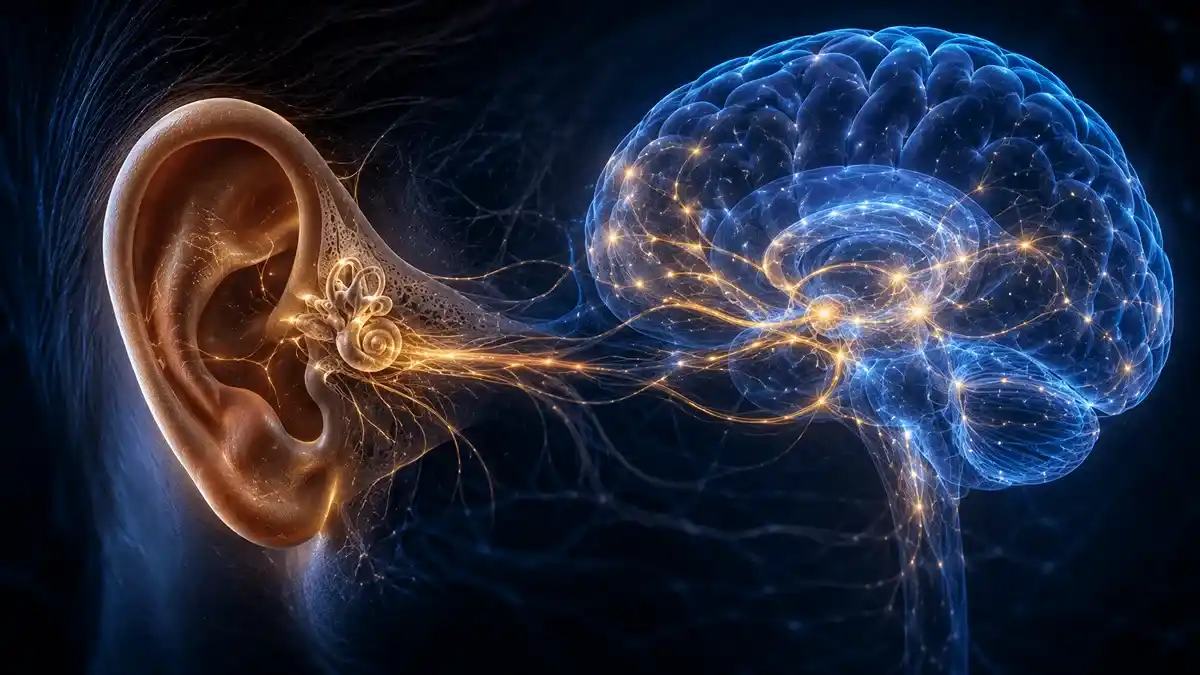
Tinnitus rarely has a single cause. It develops
from dysfunction somewhere in the auditory
pathway — from the outer ear through the
cochlea, auditory nerve, and ultimately
the brain's auditory processing centres.
Age-Related Hearing Changes
The most common cause of tinnitus is
age-related hearing loss — known clinically
as presbycusis.
As the hair cells of the cochlea naturally
degenerate over time, the brain receives
less auditory input from the affected
frequency ranges. In response, the auditory
cortex increases its sensitivity — and may
begin generating its own neural activity
to compensate for the reduced input.
This self-generated neural activity is
experienced as tinnitus.
Age-related tinnitus typically develops
gradually, affects both ears, and is most
noticeable in quiet environments.
Noise-Induced Hearing Damage
Exposure to loud sound — whether a single
extreme event like an explosion, or repeated
moderate exposure like machinery or loud
music — can damage the delicate hair cells
of the cochlea.
Unlike many cells in the body, cochlear
hair cells do not regenerate once damaged.
The resulting reduction in auditory input
triggers the same cortical compensation
mechanism — and the same self-generated
tinnitus signal.
Noise-induced tinnitus may appear immediately
after acoustic trauma or develop gradually
over years of cumulative exposure.
Earwax Buildup
A simpler and more immediately reversible
cause: earwax blockage that reduces the
transmission of sound to the eardrum.
This reduction in external sound input
can trigger temporary tinnitus that
typically resolves with earwax removal.
If tinnitus developed recently and has no
other obvious cause — earwax buildup is
worth ruling out with a healthcare professional.
Stress and Anxiety
Psychological stress does not cause tinnitus
directly — but it significantly influences
both its perception and its severity.
Elevated cortisol and sympathetic nervous
system activation increase the auditory
cortex's sensitivity and neural hyperactivity —
amplifying tinnitus that might otherwise
be mild and manageable.
Many people report that tinnitus first
became noticeable during periods of
significant stress — and that it worsens
reliably during high-stress periods.
Managing stress is one of the most consistently
effective approaches to tinnitus management —
not because stress causes the underlying
hearing change, but because it dramatically
amplifies the brain's processing of the
tinnitus signal.
Cardiovascular Factors
The inner ear is highly sensitive to blood
flow. Hypertension, atherosclerosis,
and other cardiovascular conditions that
affect blood vessel function can reduce
cochlear circulation — impairing the
delivery of oxygen and nutrients to
auditory hair cells and contributing
to tinnitus.
Pulsatile tinnitus — where the perceived
sound has a rhythmic, pulse-like quality —
is often associated with vascular causes
and warrants medical evaluation to rule
out underlying cardiovascular conditions.
Certain Medications
Several classes of medication are known
to be ototoxic — capable of damaging
the inner ear and producing tinnitus:
- High-dose aspirin and non-steroidal
anti-inflammatories (NSAIDs)
- Some antibiotics (particularly aminoglycosides)
- Loop diuretics used at high doses
- Some cancer chemotherapy agents
- Quinine-based medications
If tinnitus began or worsened after
starting a new medication, discuss this
with your prescribing doctor. In some
cases, medication adjustment resolves
or reduces the tinnitus.
Other Contributing Factors
Additional conditions associated with
tinnitus include:
Meniere's Disease — an inner ear
condition involving fluid pressure imbalance,
typically producing episodes of tinnitus,
dizziness, and fluctuating hearing loss.
TMJ Disorders — jaw joint dysfunction
can affect the muscles and structures
adjacent to the ear, producing or contributing
to tinnitus.
Head and Neck Injuries — trauma to
the head, neck, or ear can affect the
auditory system directly or through
changes in nerve and muscle function.
Thyroid Disorders — both hypothyroidism
and hyperthyroidism have been associated
with tinnitus in some individuals.
When Should You See a Doctor?
Temporary ringing after noise exposure —
a concert, a loud environment — commonly
resolves within hours or days without
treatment.
Medical evaluation is recommended when:
- Tinnitus has persisted for more than
2-3 weeks without improvement
- The sound is heard in only one ear
- Tinnitus appeared suddenly rather
than developing gradually
- Hearing loss accompanies the tinnitus
- Dizziness or balance problems are present
- Tinnitus began after head or ear trauma
- The sound has a pulsatile, heartbeat-like rhythm
- Tinnitus significantly impairs sleep,
work, or daily functioning
These presentations may indicate underlying
conditions that require specific medical
assessment and management.
Can Tinnitus Be Managed Naturally?
For most adults with chronic tinnitus —
where the underlying hearing change is
not reversible — management rather than
cure is the realistic goal.
The most evidence-informed approaches focus
on reducing the brain's perception of and
reaction to the tinnitus signal — rather
than eliminating the signal itself.
Sound Therapy and Neural Retraining
Modern tinnitus research has established
that the brain is capable of neuroplastic
adaptation — restructuring its own activity
in response to consistent stimulation.
Sound therapy programs that use structured
audio — including precision binaural beats —
can engage the auditory cortex and support
the neural habituation process through which
the brain learns to treat the tinnitus
signal as neutral and non-threatening.
NeuroTinn is a digital sound therapy
program developed specifically for tinnitus
management through binaural beats technology.
Rather than masking tinnitus with random noise,
it uses precision audio frequencies designed
to engage the auditory cortex and support
the neuroplastic changes that reduce tinnitus
perception over time.
Many people incorporate NeuroTinn into their
daily routine — particularly before sleep,
when tinnitus is most intrusive — as part
of a comprehensive management approach.
Stress and Cortisol Management
Given the significant role of cortisol and
sympathetic nervous system activation in
amplifying tinnitus perception — stress
management is one of the most reliably
effective tinnitus interventions available.
Approaches with strong evidence include
regular aerobic exercise, slow breathing
practice, consistent sleep schedules, and
evidence-backed adaptogenic supplements
like Ashwagandha KSM-66 for cortisol reduction.
Sleep Quality Optimisation
Poor sleep worsens tinnitus. Tinnitus worsens
sleep. Breaking this cycle is one of the
most important practical goals of tinnitus
management.
Natural sleep support that addresses the
cortisol and nervous system components of
poor sleep — rather than simply sedating —
produces the most meaningful improvements
for tinnitus sufferers whose primary complaint
is nighttime disruption.
Lifestyle Modifications
Evidence-supported lifestyle modifications
for tinnitus management include:
- Hearing protection — preventing further
noise-induced damage that may worsen tinnitus
- Caffeine moderation — caffeine increases
cortisol and neural stimulation in ways that
worsen tinnitus perception in some individuals
- Cardiovascular health — maintaining
healthy blood pressure and circulation
supports inner ear health
- Alcohol moderation — alcohol disrupts
sleep architecture and can worsen tinnitus
perception, particularly the day after consumption

Key Takeaways
✓ Tinnitus — the perception of sound without
an external source — affects over 50 million
adults in the USA and is one of the most
common sensory symptoms reported worldwide
✓ It originates in the auditory cortex —
the brain's sound processing centre —
not purely in the ear, making it a
neurological as much as an auditory condition
✓ The most common causes are age-related
hearing changes, noise-induced damage,
stress and cortisol elevation, and
cardiovascular factors
✓ Medical evaluation is important for sudden-onset,
one-sided, pulsatile, or hearing-loss-associated
tinnitus — these may indicate underlying
conditions requiring treatment
✓ Neural retraining through sound therapy —
particularly structured binaural beats programs
like NeuroTinn — represents one of the most
evidence-informed approaches to reducing
tinnitus perception over time
If your tinnitus has been evaluated medically
and you are looking for a natural, drug-free
approach to reducing its impact on daily life —
NeuroTinn's sound therapy program may be
worth exploring as part of your management strategy.
Frequently Asked Questions
Is tinnitus permanent?
Not always. Temporary tinnitus — after noise
exposure, earwax buildup, or medication —
often improves or resolves when the underlying
cause is addressed. Chronic tinnitus — particularly
associated with permanent hearing cell damage —
rarely disappears completely, but many people
find that its perceived intensity and impact
reduce significantly with appropriate management.
Can anxiety cause tinnitus?
Anxiety does not directly cause tinnitus —
but it significantly amplifies its perception.
Elevated cortisol and autonomic nervous system
activation increase the auditory cortex's
sensitivity, making existing tinnitus louder
and more intrusive. Managing anxiety is one
of the most reliably effective approaches
to reducing tinnitus impact.
Can tinnitus go away on its own?
Temporary tinnitus often resolves without
intervention. Chronic tinnitus — present
for more than 3-6 months — is less likely
to disappear spontaneously, but its impact
on daily life can be significantly reduced
through consistent management approaches.
Does sound therapy really work for tinnitus?
Sound therapy is one of the most widely
recommended non-pharmaceutical approaches
by audiologists and tinnitus specialists.
Evidence supports its effectiveness for
reducing tinnitus impact — particularly
through neural habituation mechanisms.
Programs using structured binaural beats
like NeuroTinn go beyond simple masking
to engage the auditory cortex more directly.
Is NeuroTinn the same as Neurontin?
No — completely different. NeuroTinn is a
natural digital sound therapy program for
tinnitus management. Neurontin (Gabapentin)
is a prescription medication for neuropathic
pain and seizures. If you need Neurontin,
consult your doctor.
How long before sound therapy produces results?
Most users report subtle improvements within
2-3 weeks of consistent daily use. More
significant reduction in tinnitus intensity
and impact typically develops over 4-8 weeks.
Neural habituation is a gradual process —
consistency of practice matters more than
session duration.
Related Guides
→ Tinnitus at Night — Why It Gets Worse and How to Sleep Better
→ NeuroTinn Review — Does It Actually Reduce Tinnitus?
→ Best Nootropics for Anxiety and Mental Stress
→ How to Sleep Better for Brain Health — Complete Guide
→ Brain Fog: Causes, Symptoms and Natural Solutions
Medical Disclaimer
This article is educational and does not replace
professional medical advice. Tinnitus can be
a symptom of underlying medical conditions —
including acoustic neuroma, Meniere's disease,
cardiovascular disorders, and thyroid conditions —
that require proper medical evaluation. If your
tinnitus is sudden in onset, one-sided, accompanied
by hearing loss or dizziness, or follows head trauma —
seek medical assessment promptly. Always consult
your doctor before beginning any new wellness
programme, particularly if you take prescription
medications.
Sharp Brain Lab is an independent editorial platform.
We do not diagnose, treat, or cure any medical condition.
TL;DR
- What it is: Tinnitus — ringing in the ears —
is the brain's auditory cortex generating
its own neural signals when normal auditory
input is reduced or damaged
- Most common causes: Age-related hearing changes,
noise damage, stress and cortisol, earwax,
cardiovascular factors, certain medications
- When to see a doctor: Sudden onset, one-sided,
with hearing loss or dizziness, or pulsatile
- Natural approach: Sound therapy with binaural
beats (NeuroTinn) for neural retraining +
stress and cortisol management
- Next step: Try NeuroTinn risk-free for 60 days
as part of a comprehensive tinnitus management approach
This content is based on information from:
- PubMed peer-reviewed tinnitus and audiology research
- NIH National Institute on Deafness and Other
Communication Disorders (NIDCD)
- American Tinnitus Association educational resources
- American Academy of Otolaryngology guidelines
- Lancet Neurology tinnitus review publications
Last updated: 20 August 2026
References
1. Bhatt JM, et al. (2017). Prevalence of and
risk factors for tinnitus and hearing loss
in US adults. JAMA Otolaryngol Head Neck Surg.
142(10):959-965.
2. Langguth B, et al. (2013). Tinnitus: causes
and clinical management. Lancet Neurol.
12(9):920-930.
3. Lockwood AH, et al. (2002). Tinnitus.
New Engl J Med. 347(12):904-910.
4. Searchfield GD. (2019). Tinnitus: a cognitive
and neurological disorder. Front Neurol. 10:818.
5. Cima RF, et al. (2019). Cognitive-behavioral
treatments for tinnitus: a review of the
literature. J Am Acad Audiol. 25(1):29-61.
recomendado
Sleep Optimization
YuSleep
Recommended for adults who struggle with falling asleep, waking up at 3 AM, or waking up tired even after a full night's sleep. YuSleep combines clinically studied ingredients that support deeper, more restorative sleep without creating dependency.
Brain Supplements
Pineal Guardian X
A premium natural brain health supplement designed to support memory, mental clarity, focus, and long-term cognitive performance with a carefully selected blend of plant-based ingredients.
Brain Audio Programs
Audio Brain Programs
A 7-minute daily audio that uses neuroscience-backed sound frequencies to sharpen focus, boost memory, and unlock your brain's full potential. Used by 80,000+ people worldwide.
Brain Audio Programs
The Memory Wave
A targeted audio program that stimulates your brain's memory center using Theta wave technology. Specifically designed for adults over 40 who want sharper recall and clearer thinking.
Brain Audio Programs
The Genius Switch
Neuroscience-backed audio that activates your brain's peak performance mode in minutes. One of the highest-converting brain programs available — thousands of professionals use it daily.