
Why You Wake Up at 3 AM: Causes and Solutions
Waking up at 3 AM every night? Discover the real neurological and hormonal causes — and the most effective science-backed solutions to sleep through the night.

disclosure This article contains affiliate links. Purchases may earn us a commission at no extra cost to you. We only recommend products we've reviewed.
featured in this review
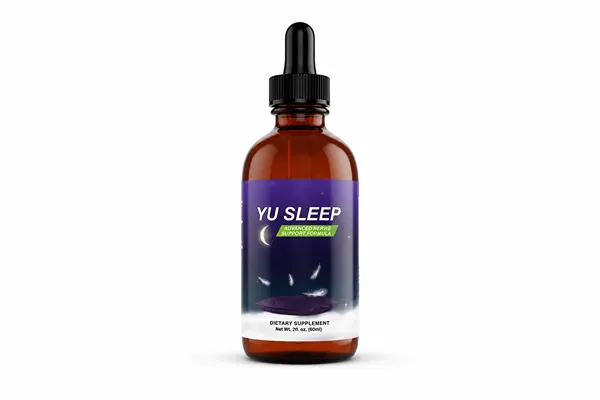
YuSleep
Recommended for adults who struggle with falling asleep, waking up at 3 AM, or waking up tired even after a full night's sleep. YuSleep combines clinically studied ingredients that support deeper, more restorative sleep without creating dependency.
Why You Wake Up at 3 AM: The Real Causes and How to Sleep Through the Night
It happens with unsettling regularity.
You fall asleep without difficulty. Sleep deeply for a few hours. And then — at almost exactly 3 AM — you are wide awake.
Your mind starts immediately. The to-do list. The unresolved conversation. The decision you haven't made. The worry you thought you'd put to rest.
You lie there, trying to fall back asleep, watching the minutes pass. Sometimes you manage it — eventually. Sometimes you don't.
And in the morning, you are exhausted — not from not sleeping, but from the interruption that stole your deepest, most restorative sleep hours.
If this pattern is familiar, you are not alone. 3 AM waking is one of the most commonly reported sleep complaints among adults — particularly those over 35, and particularly those under significant professional or personal stress.
And it has specific, addressable causes.
Why 3 AM? The Neuroscience of Middle-of-the-Night Waking
The timing is not random.
Understanding why 3 AM specifically is the most common waking time requires understanding how sleep is structured across the night.
Sleep Architecture — Why the Second Half Matters
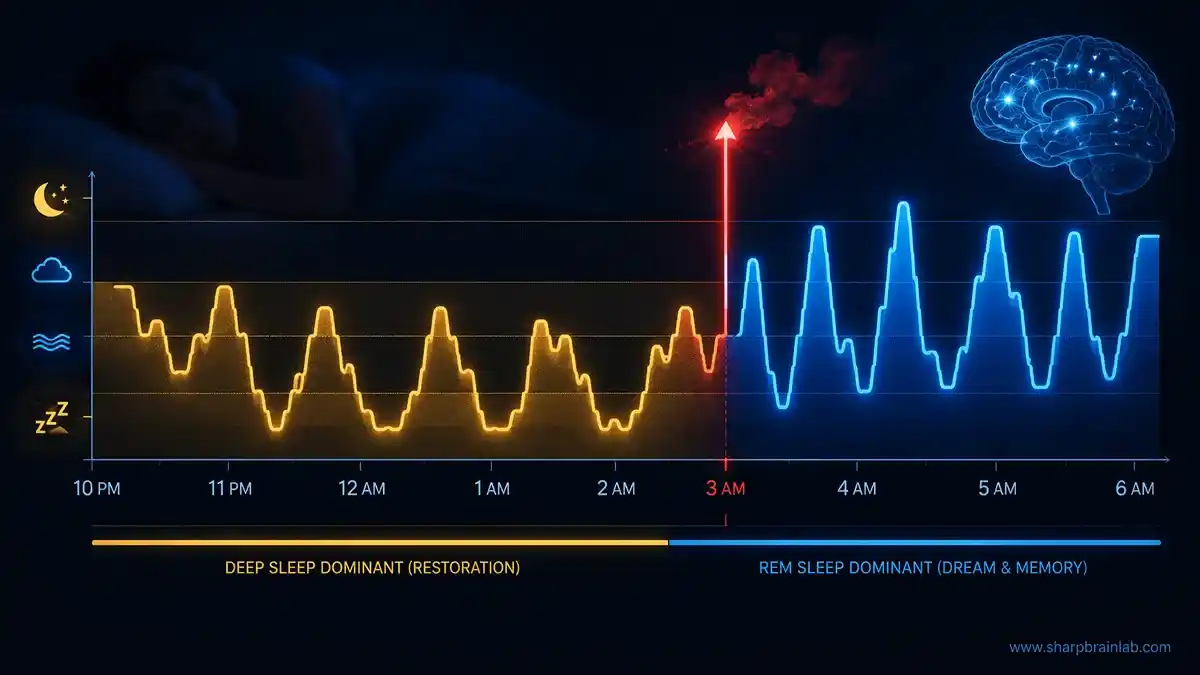
Sleep does not occur uniformly across the night. It cycles through distinct stages — deep slow-wave sleep and REM sleep — in approximately 90-minute cycles that shift in character as the night progresses.
First half of the night (10 PM — 2 AM):
Dominated by deep slow-wave sleep — the most physically restorative stage. This is when the body repairs tissue, releases growth hormone, and the brain begins clearing metabolic waste through the glymphatic system.
Second half of the night (2 AM — 6 AM):
Dominated by REM sleep — lighter, more emotionally active sleep where dreams occur, memories are consolidated, and emotional experiences are processed.
The transition between these phases — occurring around 2-3 AM for most adults — is a natural vulnerability point. Sleep becomes lighter as the body shifts from slow-wave to REM dominance. In healthy sleep, this transition happens seamlessly and unconsciously.
But when cortisol spikes at this transition point — as it does in chronically stressed adults — the brain breaks through into full wakefulness rather than transitioning smoothly between sleep stages.
The Cortisol Spike — The Primary Cause
Cortisol — your body's primary stress hormone — follows a natural circadian rhythm that is closely tied to the sleep-wake cycle. It is lowest during the first half of sleep and rises gradually through the early morning hours, reaching its peak shortly after waking to support alertness and energy for the day ahead (see References below).
In people under chronic stress — professional pressure, financial worry, relationship difficulties, health concerns — this cortisol rhythm is disrupted. Cortisol begins rising earlier — often around 2-3 AM — producing a hormonal state of alertness that breaks sleep at exactly the wrong moment.
The result is the 3 AM wake-up: lying awake with an activated mind, unable to return to the lighter, REM-dominated sleep that the second half of the night should provide.
Blood Sugar Instability
A second common cause of 3 AM waking — particularly in people who eat late at night or consume alcohol in the evening — is blood sugar instability.
When blood sugar drops in the early morning hours, the body releases adrenaline and cortisol to raise it — producing the same alerting effect as the stress-driven cortisol spike. The result is the same: waking at 2-4 AM feeling anxious and unable to fall back asleep.
Alcohol — The 3 AM Enemy
Alcohol is one of the most misunderstood sleep disruptors. Many people use it to help them "wind down" before sleep — and it does produce faster sleep onset. But alcohol is metabolised within 3-4 hours of consumption, and as it clears the bloodstream it produces a rebound effect:
- Cortisol rises
- Adrenaline spikes
- REM sleep is suppressed
- Sleep becomes fragmented
The timing of this rebound — approximately 3-4 hours after consumption — means that an evening drink at 11 PM is a common contributor to a 2-3 AM awakening, even when people don't connect the two events.
Anxiety and Unprocessed Stress
Unresolved cognitive and emotional stress does not disappear when you fall asleep. It continues to be processed — often surfacing as the racing thoughts that accompany 3 AM waking.
The mind that wakes at 3 AM is not simply awake — it is actively processing the unresolved concerns, decisions, and worries that daytime busyness kept at bay. In the quiet of 3 AM, with no distractions available, these thoughts feel more intense and more urgent than they do during the day.
This is not a sleep disorder. It is the brain's attempt to process what daytime hours did not allow — combined with a hormonal environment that prevents return to sleep.
The Most Effective Solutions for 3 AM Waking
Solution 1 — Address Cortisol at Its Source
For stress-driven 3 AM waking — the most common cause — managing the cortisol response is the highest-priority intervention.
Evening cortisol management:
- No work-related activity after 8 PM — the brain needs time to reduce cognitive arousal before sleep
- Pre-sleep writing: 5 minutes capturing tomorrow's priorities and unresolved concerns offloads them from active working memory — reducing the likelihood of the brain returning to them at 3 AM
- Slow breathing before sleep: 4 seconds inhale, 6 seconds exhale — directly activates the parasympathetic nervous system and reduces cortisol
Daytime cortisol management:
- Aerobic exercise — the most effective natural cortisol regulator available
- Ashwagandha KSM-66 — clinical trials demonstrating significant cortisol reduction (see References below)
- Addressing primary stress sources directly rather than managing symptoms indefinitely
Solution 2 — Eliminate Alcohol Within 4 Hours of Sleep
If you drink alcohol in the evening and wake at 3 AM — this is almost certainly the primary cause. The rebound effect is predictable, reliable, and directly connected to 3 AM waking.
Eliminating alcohol within 4 hours of your target sleep time typically resolves alcohol-driven 3 AM waking within days. This single change produces significant improvements for many people without any other intervention.
Solution 3 — Stabilise Blood Sugar Before Bed
For people whose 3 AM waking is accompanied by feelings of hunger, shakiness, or anxiety that resolves after eating — blood sugar instability is likely contributing.
Blood sugar stabilisation for sleep:
- Avoid high-carbohydrate meals or snacks within 2 hours of sleep
- If eating before bed, choose protein and healthy fat — a small amount of cheese, nuts, or a boiled egg stabilises blood sugar through the night
- Avoid fruit juice, sugary desserts, or refined carbohydrates in the evening
Solution 4 — Support Natural Cortisol Regulation With Targeted Nutrition
Several natural compounds have demonstrated specific effectiveness for reducing the nighttime cortisol spikes that cause 3 AM waking.
Lemon Balm Extract — traditionally used to support calm and reduce stress-related symptoms; some clinical research has associated Lemon Balm supplementation with reductions in stress and anxiety scores.
Magnesium Glycinate — magnesium deficiency is linked to elevated nighttime cortisol and disrupted sleep. Clinical research on magnesium supplementation in older adults with insomnia has shown improvements in sleep continuity — including reduced nighttime awakenings (see References below).
L-Theanine — promotes Alpha brain wave activity and reduces anxiety without sedation, supporting the calm mental state that allows the 3 AM transition between sleep stages to proceed without waking.
GABA — quiets overactive brain activity, reducing the likelihood of the nervous system breaking through into full wakefulness during the 3 AM transition.
These four compounds — combined with micro-dose Melatonin, 5-HTP, Red Tart Cherry Extract, Apigenin, and Vitamins B6 and B2 — form the complete formula of **YuSleep**, a natural sleep supplement specifically formulated to address the biological mechanisms of poor sleep quality including the 3 AM wake-up pattern.
Many YuSleep users specifically report that the 3 AM wake-up — their primary sleep complaint — is the first and most noticeable improvement, typically within the first week of consistent use.
Solution 5 — Optimise Your Sleep Environment for the Second Half of the Night
The second half of the night — when 3 AM waking occurs — is REM-dominated and more sensitive to environmental disruption than the deep slow-wave sleep of the first half.
Environmental optimisation for the second half of sleep:
- Complete darkness — even small amounts of light disrupt REM sleep
- Consistent cool temperature — 16-19°C through the entire night
- No phone charging near the bed — even notifications in silent mode can disrupt the lighter REM sleep of the early morning hours
- Blackout curtains — particularly important in summer when natural light begins in the early morning hours
Solution 6 — If You Wake — Do Not Watch the Clock
One of the most counterproductive behaviours during 3 AM waking is checking the time.
Checking the clock activates the prefrontal cortex — the brain's reasoning and planning centre — and triggers calculation ("I have 3 hours left — if I fall asleep now I'll get...") that produces the very cognitive arousal that prevents return to sleep.
What to do instead:
- Do not check the time
- Avoid turning on lights
- Avoid picking up your phone
- Use slow breathing — 4 seconds in, 6 seconds out — to reduce the cortisol and adrenaline driving wakefulness
- If still awake after 20 minutes — get up quietly, do something calm in dim light, and return to bed when sleepy

A Practical Protocol for Stopping 3 AM Waking
This evening:
- No alcohol tonight — assess whether 3 AM waking resolves within 3 nights
- Pre-sleep writing: 5 minutes capturing tomorrow's tasks and concerns
- No screens 60 minutes before bed
- Cool bedroom to 16-19°C
Before bed:
- Magnesium Glycinate 300mg — 30-60 minutes before sleep
- YuSleep 2 droppers — 30 minutes before sleep
- Slow breathing: 4 seconds in, 6 seconds out for 5 minutes
If you wake at 3 AM:
- Do not check the time
- Do not turn on lights or check your phone
- Slow breathing — focus entirely on the breath
- If still awake after 20 minutes — get up quietly for 15-20 minutes then return
This week:
- Aerobic exercise minimum 3 times — 20-30 minutes each
- No late-night high-carbohydrate meals
- Consistent sleep and wake times — even at weekends
Most people following this protocol report significant reduction in 3 AM waking within 5-10 days. Complete resolution typically occurs within 2-4 weeks of consistent implementation.
When 3 AM Waking Warrants Medical Assessment
Persistent 3 AM waking that does not improve with the interventions above — particularly if accompanied by loud snoring, gasping during sleep, or excessive daytime sleepiness — may indicate sleep apnoea, a common and frequently undiagnosed condition that requires medical assessment and treatment.
If 3 AM waking is accompanied by significant anxiety, depression, or other mental health symptoms — professional support is appropriate alongside lifestyle interventions.
Frequently Asked Questions
Is waking at 3 AM normal?
Occasional waking during the night is normal — the 3 AM transition between sleep stages is a natural vulnerability point. Consistent waking at this time that prevents return to sleep for more than 20-30 minutes, happening more than twice per week, warrants attention.
How long before the 3 AM waking stops?
With the right interventions — particularly eliminating alcohol, managing cortisol, and nutritional support through YuSleep — most people notice significant improvement within 5-10 days. Complete resolution typically takes 2-4 weeks.
Will YuSleep stop my 3 AM waking?
YuSleep specifically contains Lemon Balm and GABA — the compounds most directly targeted at the cortisol-driven 3 AM waking pattern. Many users report that reduction in 3 AM wake-ups is the first and most noticeable improvement, typically within the first week. The 60-day guarantee makes it risk-free to assess its effectiveness for your specific pattern.
Does alcohol really cause 3 AM waking?
Yes — for many people, consistently. Alcohol is metabolised within 3-4 hours of consumption, producing a cortisol and adrenaline rebound that reliably disrupts sleep at exactly this time. Eliminating evening alcohol is one of the single most impactful interventions for 3 AM waking.
Is there a money-back guarantee on YuSleep?
Yes — 60 days. Completely risk-free.
Related Guides
Looking for more sleep and brain health resources?
→ How to Sleep Better for Brain Health — Complete Science Guide
→ YuSleep Review — Honest Independent Review
→ Mental Exhaustion — Causes and Recovery Guide
→ How to Improve Memory Naturally — Complete Guide
→ Brain Fog: Causes, Symptoms and Natural Solutions
This content is based on information from:
- Peer-reviewed research on the circadian regulation of cortisol and sleep
- Peer-reviewed research on magnesium and ashwagandha for sleep and cortisol
Last updated: 8 September 2026
References
1. Bowles NP, Thosar SS, Butler MP, et al. (2022). The circadian system modulates the cortisol awakening response in humans. Front Neurosci. 16:995452.
2. Abbasi B, et al. (2012). The effect of magnesium supplementation on primary insomnia in elderly. J Res Med Sci. 17(12):1161-9.
3. Chandrasekhar K, et al. (2012). A prospective, randomized double-blind, placebo-controlled study of safety and efficacy of ashwagandha root. Indian J Psychol Med. 34(3):255-62.
4. Lopresti AL, Smith SJ, Malvi H, Kodgule R. (2019). An investigation into the stress-relieving and pharmacological actions of an ashwagandha (Withania somnifera) extract. Medicine (Baltimore). 98(37):e17186.
recomendado
Brain Audio Programs
Audio Brain Programs
A 7-minute daily audio that uses neuroscience-backed sound frequencies to sharpen focus, boost memory, and unlock your brain's full potential. Used by 80,000+ people worldwide.
Brain Audio Programs
The Memory Wave
A targeted audio program that stimulates your brain's memory center using Theta wave technology. Specifically designed for adults over 40 who want sharper recall and clearer thinking.
Brain Audio Programs
The Genius Switch
Neuroscience-backed audio that activates your brain's peak performance mode in minutes. One of the highest-converting brain programs available — thousands of professionals use it daily.
Brain Supplements
Pineal Guardian X
A premium natural brain health supplement designed to support memory, mental clarity, focus, and long-term cognitive performance with a carefully selected blend of plant-based ingredients.