
Do Binaural Beats Work? What the Science Actually Says
Binaural beats are everywhere on YouTube and Spotify — but what does the actual research show? Here's the real mechanism, the honest evidence, and where the marketing gets ahead of the science.
disclosure This article contains affiliate links. Purchases may earn us a commission at no extra cost to you. We only recommend products we've reviewed.
featured in this review
Audio Brain Programs
A 7-minute daily audio that uses neuroscience-backed sound frequencies to sharpen focus, boost memory, and unlock your brain's full potential. Used by 80,000+ people worldwide.
Search "binaural beats" and you'll find millions of videos promising everything from deeper focus to lucid dreaming to literal brain rewiring — usually over an eight-hour loop of tones with a stock-photo thumbnail of a glowing brain. It's the kind of claim density that makes a reasonable person suspicious.
Somewhere between "total pseudoscience" and "miracle audio technology" is where the actual research sits. Both extremes are wrong, and the honest answer is more interesting than either.
What a Binaural Beat Actually Is
Start with the mechanism, because it's the one part of this that isn't in dispute.
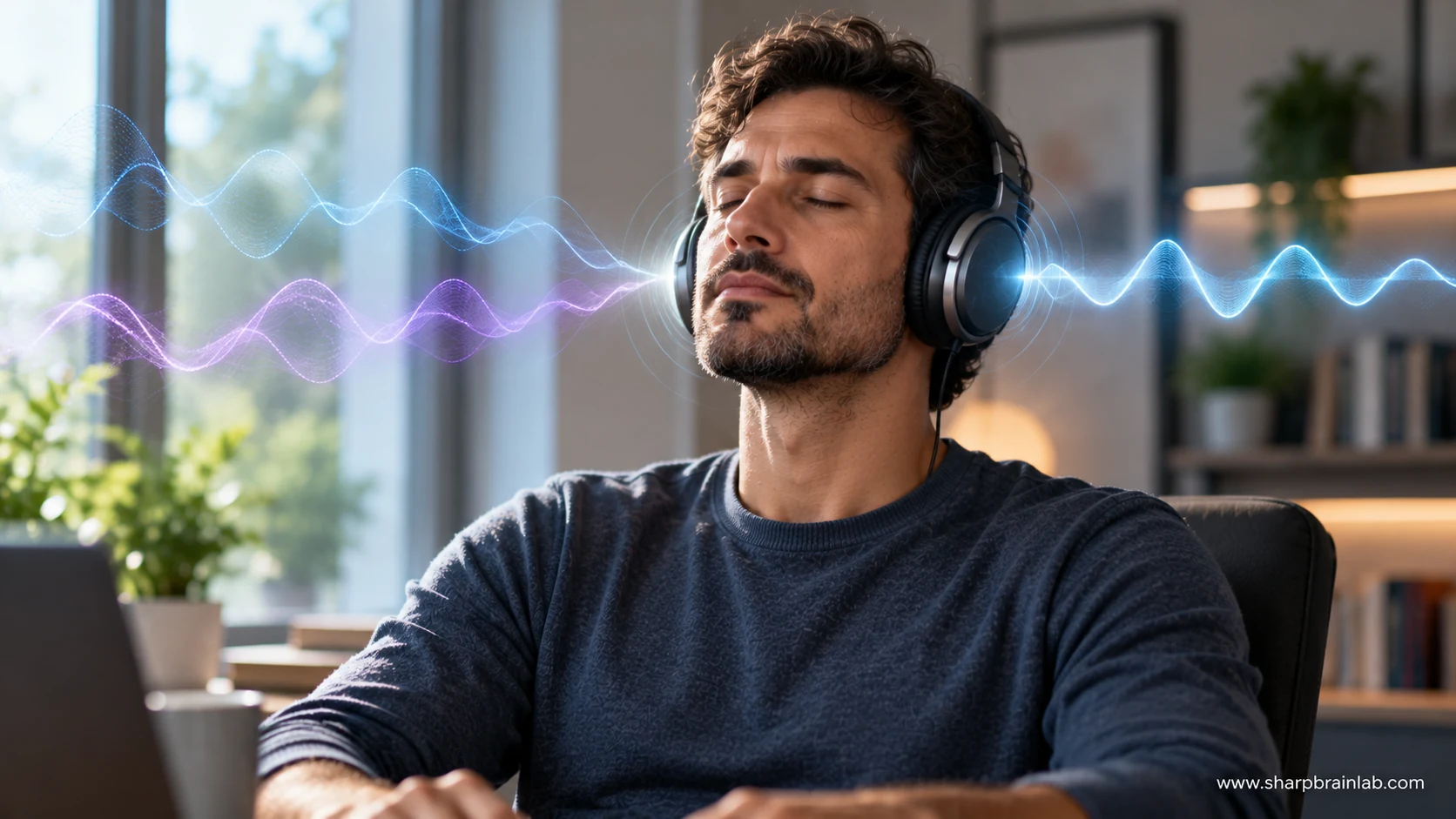
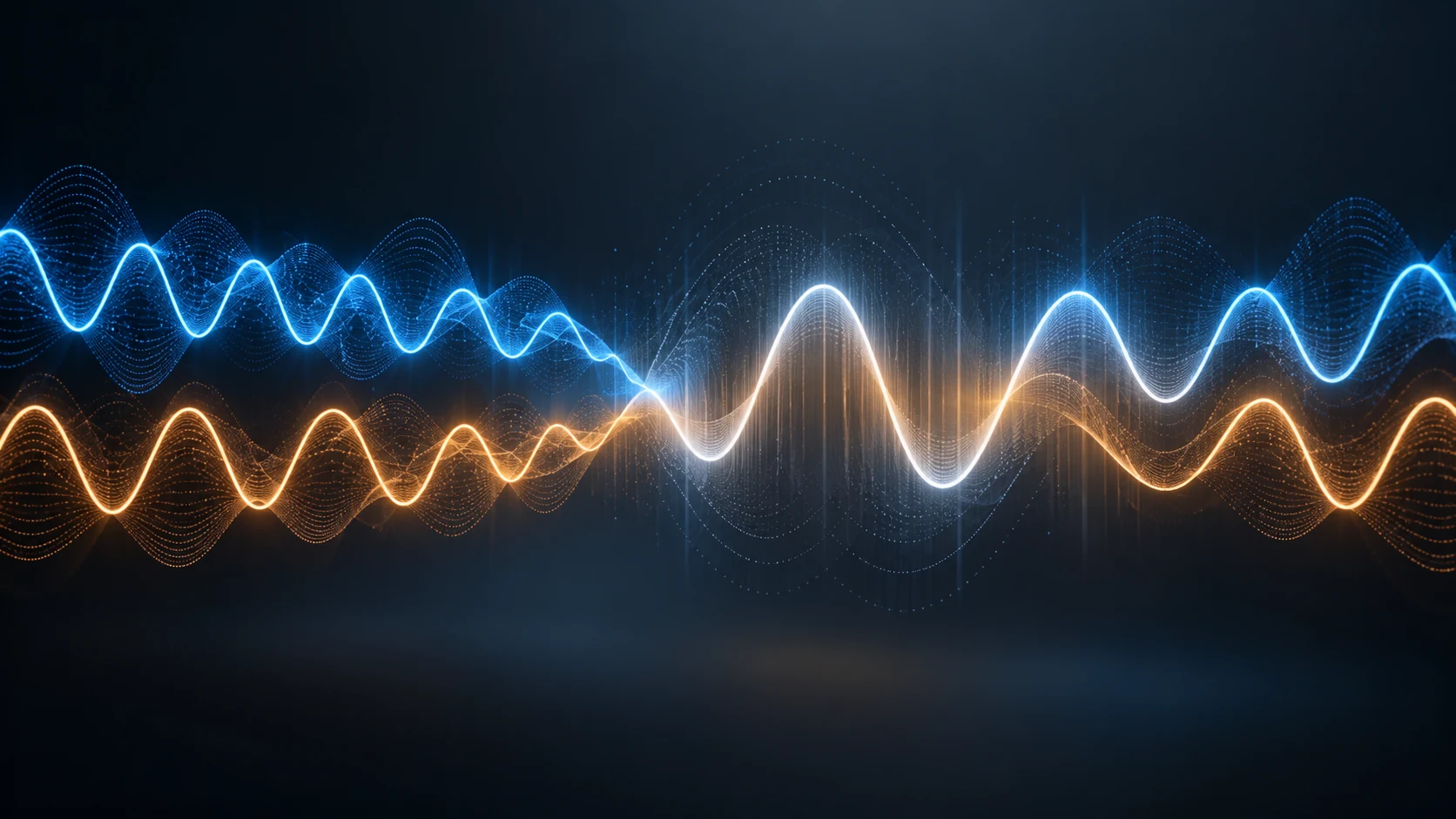
Play a 200 Hz tone in your left ear and a 210 Hz tone in your right ear — through headphones, separately, not mixed — and your brain doesn't hear two tones. It perceives a third, phantom pulsing tone at 10 Hz: the mathematical difference between the two. That perceived pulse is the "binaural beat," and it only happens inside the brain, in the region that processes interaural timing differences (the superior olivary complex, for anyone curious). It requires stereo headphones — play the same file through speakers and the effect disappears, because both ears now hear both tones.
This part is well-established auditory physiology, not a marketing invention.
How Binaural Beats Work: Brainwave Entrainment Explained
The theory behind why this matters goes one step further, and this is where "entrainment" comes in.
Your brain's electrical activity naturally oscillates at different frequencies depending on your mental state — slow Delta waves during deep sleep, Theta during light sleep and deep meditation, Alpha during relaxed wakefulness, Beta during active thinking and alertness. The entrainment hypothesis proposes that when you're exposed to a binaural beat at, say, 6 Hz, your brainwave activity will gradually synchronize toward that frequency — nudging you toward the mental state associated with it.
That's the premise behind audio programs like The Brain Song, which use Theta-frequency binaural beats aimed at the mental state associated with focus and memory consolidation, and The Genius Switch, which targets frequencies associated with sustained attention and flow states. EEG studies have measured genuine, detectable shifts in brainwave activity during binaural beat exposure — the entrainment effect itself is real and observable on a scan. The open question is how reliably that measurable neural shift translates into the subjective, functional benefits — better memory, sharper focus, less anxiety — that most people are actually looking for.
What the Evidence Actually Shows
Here's where it gets more nuanced than either the skeptics or the sellers usually let on.
A 2019 meta-analysis in Psychological Research, pooling 22 studies, found an overall medium, statistically significant effect (Hedges' g = 0.45) of binaural beats on cognition, anxiety, and pain perception — a real, measurable effect, not nothing. But the same analysis found that the size and even the direction of the effect depended heavily on the specific frequency used, how long people were exposed to it, and whether it played before a task, during it, or both (see References below).
A more recent 2023 meta-analysis focused specifically on memory and attention, covering 15 studies and 31 effect sizes, found a similar medium effect (g = 0.40) — but flagged that Theta and Beta frequency beats produced inconsistent results across different types of memory tasks (recall versus recognition) and attention measures. The authors were explicit that the findings, while generally positive, were heterogeneous enough to warrant caution, and called for more rigorously designed studies before drawing firm conclusions about which frequencies do what (see References below).
Put plainly: the research base shows a real, modest, average effect across studies — and meaningful inconsistency underneath that average. That's a genuinely different claim from "binaural beats are proven to boost your IQ" or "scientifically guaranteed to unlock peak performance," and it's worth sitting with that distinction rather than skating past it.
Where the Evidence Is Limited or Inconsistent
A few things the current research does not establish, and that any honest source should say plainly:
- There's no large body of evidence showing binaural beats produce large, dramatic cognitive gains comparable to sleep, exercise, or targeted skill practice.
- Individual response varies significantly — some people report a clear, noticeable effect; others notice little to nothing, and the research doesn't yet explain why that variation exists.
- Most studies measure short-term effects during or immediately after listening. Long-term, cumulative effects of daily use over months are far less studied.
- The specific frequency, exposure duration, and timing all appear to matter, but there isn't yet a settled, universally agreed-upon "best protocol" — different programs and different studies use different parameters.
Marketing Claims That Go Beyond the Evidence
This is worth calling out directly, because it's common in this category: claims like "clinically proven to activate genius-level thinking," "guaranteed to rewire your brain in minutes," or "neuroscience has confirmed" a specific, dramatic transformation are marketing language, not accurate summaries of the literature above.
What the evidence actually supports is more modest and, frankly, more credible: a real physiological mechanism (auditory beat perception), a measurable neural response (EEG-detected entrainment), and a modest average positive effect on some cognitive and emotional outcomes — with real variability by frequency, protocol, and individual. No peer-reviewed research supports "guaranteed" outcomes for any individual person, because that's not how biological variability works for any intervention, audio-based or otherwise.

When This May Be Worth Trying
Given all of that, binaural beats are a reasonable thing to experiment with if you're realistic about what you're testing. They're non-invasive, have no known significant side effects, require only headphones, and the downside of trying them is essentially just time. That's a very different risk profile from a supplement or a medical treatment.
Programs like The Brain Song package Theta-frequency binaural beats into a short daily session (around seven minutes) rather than requiring you to find and calibrate raw tones yourself — which matters in practice, since exposure duration and consistency are among the variables the research flags as relevant. For people whose primary interest is sustained focus specifically rather than general mental clarity, The Genius Switch uses a similar underlying technology tuned toward flow-state attention, and The Memory Wave targets frequencies associated with memory consolidation. None of these are positioned, here or anywhere credible, as clinically proven treatments — they're audio tools built on a real but still-maturing area of auditory neuroscience.
Frequently Asked Questions
Do binaural beats actually change your brainwaves?
EEG research has measured genuine shifts in brainwave activity during exposure to binaural beats — that part of the entrainment mechanism is real and observable. Whether that neural shift reliably produces the specific cognitive or emotional benefit someone is hoping for is less settled and appears to depend on frequency, duration, and the individual.
Do I need headphones for binaural beats to work?
Yes. The binaural beat effect requires each ear to receive a separate tone. Playing the same audio through speakers means both ears hear both tones, which eliminates the effect entirely.
Are binaural beats safe?
For most people, yes — there are no significant documented side effects, since it's sound, not a substance. People with a history of seizures are sometimes advised to be cautious with any rhythmic audio or visual stimulation and should check with a physician first.
How long before I'd notice anything?
Studies typically measure effects during or shortly after a listening session, so any noticeable effect tends to be short-term per session rather than cumulative overnight. Longer-term, consistent use is less studied, which is part of why realistic expectations matter here.
Is this the same as meditation?
No. Binaural beats are a passive audio input; meditation is an active mental practice. Some research treats them as complementary — audio exposure alongside a relaxed or focused state — rather than as substitutes for one another.
Related Guides
→ What Are Nootropics? A Beginner's Guide
→ How to Get Into Flow State Fast: The Science of Peak Mental Performance
→ The Brain Song Review 2026: Is It Worth $39?
→ The Brain Song vs The Genius Switch: Which Is Better?
→ Is The Brain Song a Scam? An Honest Independent Review
This content is based on information from:
- Peer-reviewed meta-analyses on binaural auditory beats and cognition, anxiety, and pain perception
- Peer-reviewed meta-analysis and systematic review on binaural beats for memory and attention
Last updated: 30 September 2026
References
1. Garcia-Argibay M, Santed MA, Reales JM. (2019). Efficacy of binaural auditory beats in cognition, anxiety, and pain perception: a meta-analysis. Psychological Research. doi:10.1007/s00426-018-1066-8.
2. Basu S, Banerjee B. (2023). Potential of binaural beats intervention for improving memory and attention: insights from meta-analysis and systematic review. Psychological Research. 87(4):951-963.
recomendado
Brain Audio Programs
The Genius Switch
Neuroscience-backed audio that activates your brain's peak performance mode in minutes. One of the highest-converting brain programs available — thousands of professionals use it daily.
Brain Audio Programs
The Memory Wave
A targeted audio program that stimulates your brain's memory center using Theta wave technology. Specifically designed for adults over 40 who want sharper recall and clearer thinking.
Tinnitus Relief
NeuroTinn
Natural sound therapy program designed to help reduce tinnitus perception, promote relaxation, and improve sleep without medication.
Sleep Optimization
YuSleep
Recommended for adults who struggle with falling asleep, waking up at 3 AM, or waking up tired even after a full night's sleep. YuSleep combines clinically studied ingredients that support deeper, more restorative sleep without creating dependency.
Brain Supplements
Pineal Guardian X
A premium natural brain health supplement designed to support memory, mental clarity, focus, and long-term cognitive performance with a carefully selected blend of plant-based ingredients.