
Tinnitus and Hearing Loss: Is There a Connection?
Does tinnitus always mean hearing loss? Here's what the research actually shows about the link between the two — including why some people have tinnitus with a normal hearing test.
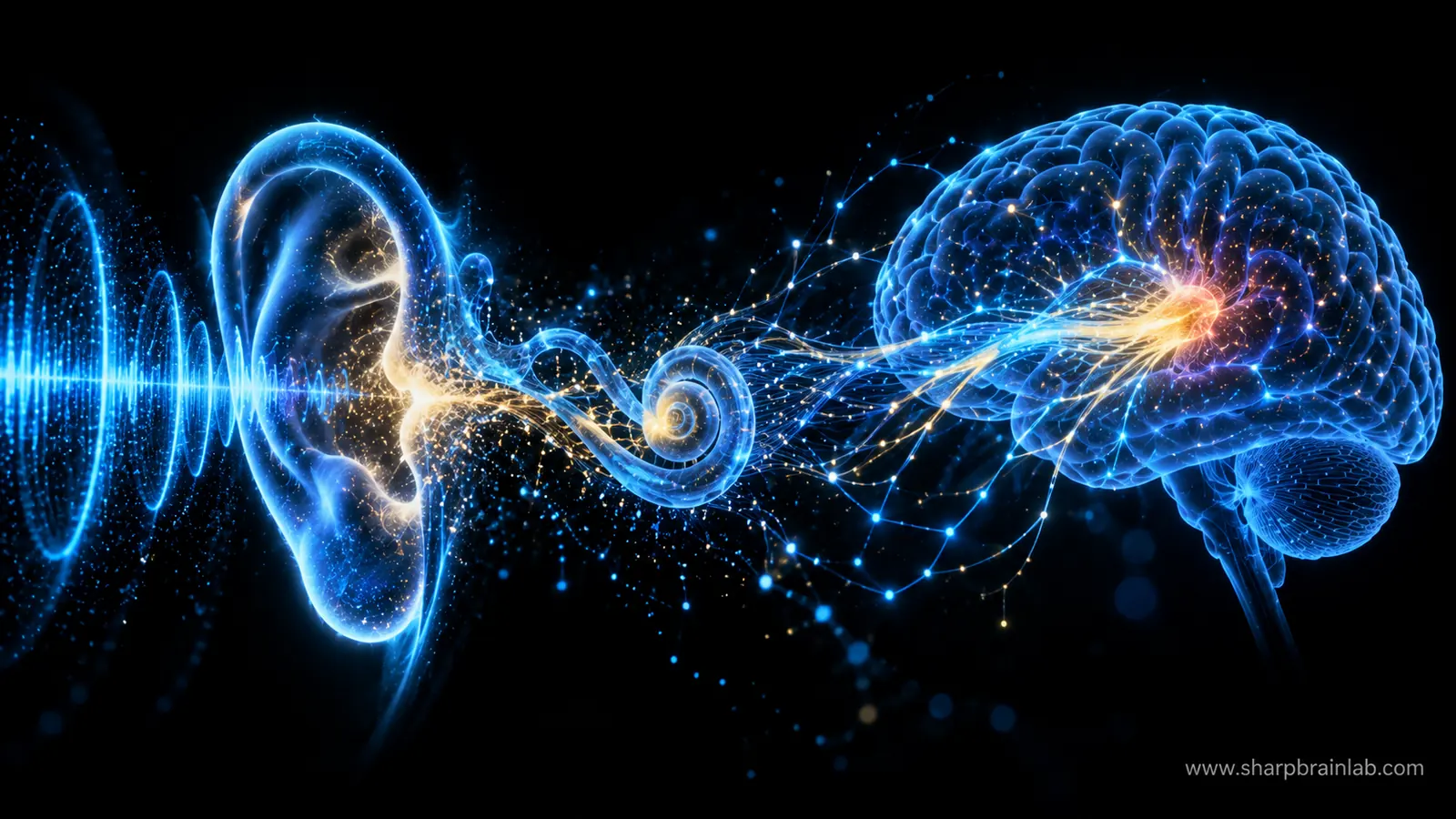
disclosure This article contains affiliate links. Purchases may earn us a commission at no extra cost to you. We only recommend products we've reviewed.
featured in this review
NeuroTinn
Natural sound therapy program designed to help reduce tinnitus perception, promote relaxation, and improve sleep without medication.
Tinnitus and Hearing Loss: Is There a Connection?
Most people who develop tinnitus ask the same question sooner or later: does this mean my hearing is going? The honest answer is more nuanced than a yes or no — hearing loss and tinnitus are strongly linked, but the relationship runs in more than one direction, and a standard hearing test does not always tell the full story.
Here is what the research actually shows about how the two conditions connect, why some people develop tinnitus with a completely "normal" hearing test result, and what that means for managing it.
Quick Answer
Is tinnitus connected to hearing loss? Yes, for most people. Official data from the National Institute on Deafness and Other Communication Disorders (NIDCD) states that hearing loss — whether from aging or noise exposure — is strongly associated with tinnitus, and most people who have tinnitus also have some degree of hearing loss. But the relationship is not absolute: some people with hearing loss never develop tinnitus, and — more surprisingly — some people develop tinnitus despite passing a standard hearing test with normal results. Recent research on "hidden" cochlear nerve damage helps explain that second group, and it changes what managing tinnitus should realistically focus on.
How Common Is the Overlap, Really?
Tinnitus itself is common: NIDCD estimates that 10 to 25% of adults experience it in some form. Among that group, the agency is direct about the connection to hearing: "most people who have it have some degree of hearing loss," and hearing loss caused by aging or exposure to loud noise is described as strongly associated with tinnitus onset (see References below).
Noise exposure specifically stands out. NIDCD notes that noise-induced tinnitus is the most common service-related disability among military veterans — a population with well-documented, often extreme, occupational noise exposure. That single data point is a useful reminder that tinnitus caused by hearing damage is not a rare edge case; it is one of the most predictable consequences of sustained loud-noise exposure, whether from combat, industrial work, or simply years of loud concerts and headphones.
What the data does not support is treating the relationship as automatic in either direction. NIDCD explicitly notes that some people with measurable hearing loss never develop tinnitus at all — so hearing damage clearly is not, by itself, a sufficient explanation for why tinnitus happens to some people and not others.
Why Hearing Loss Can Trigger a Phantom Sound
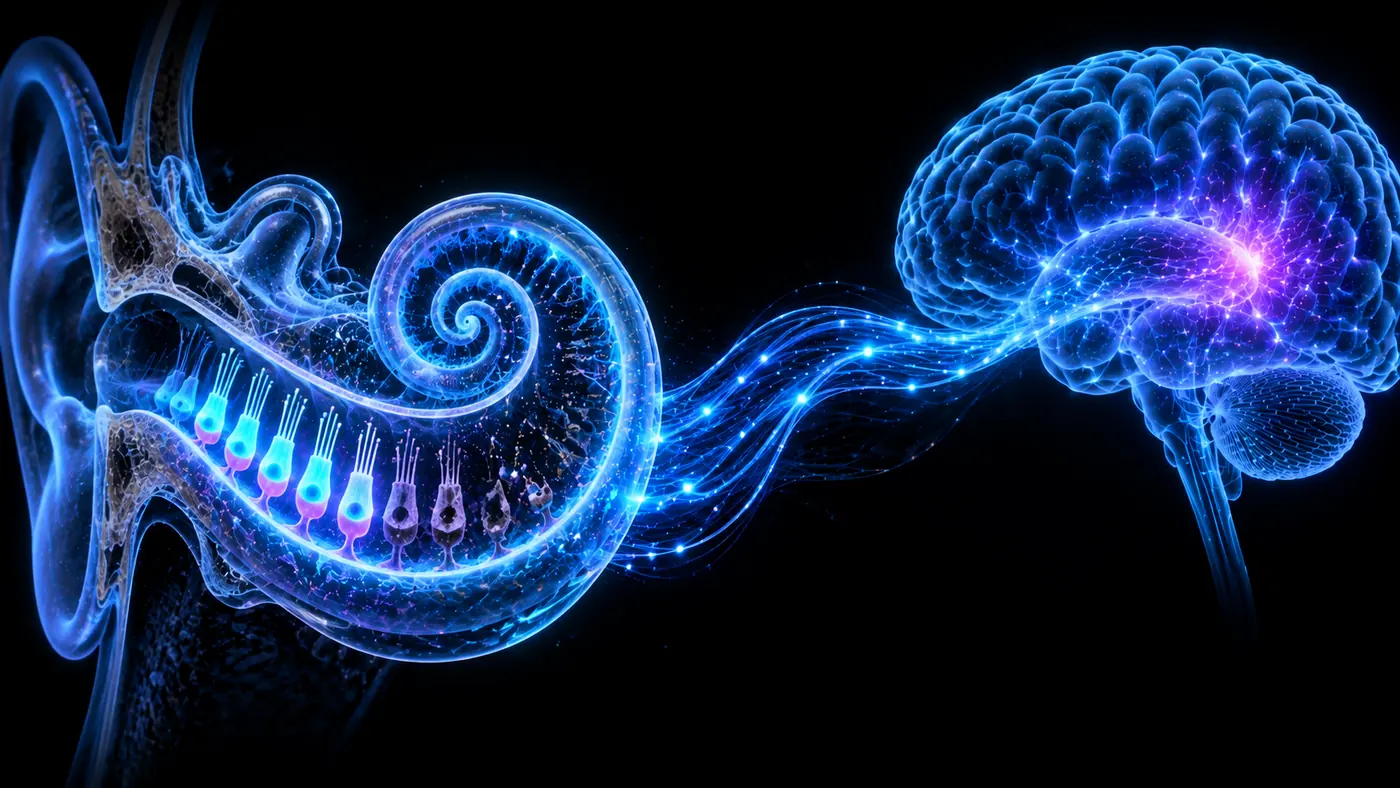
The leading explanation for why damaged hearing produces a ringing, buzzing, or hissing sound that is not actually there involves the brain, not just the ear. When hair cells in the cochlea are damaged — by noise, age, or ototoxic medication — the auditory nerve sends less real signal to the brain's auditory processing centers.
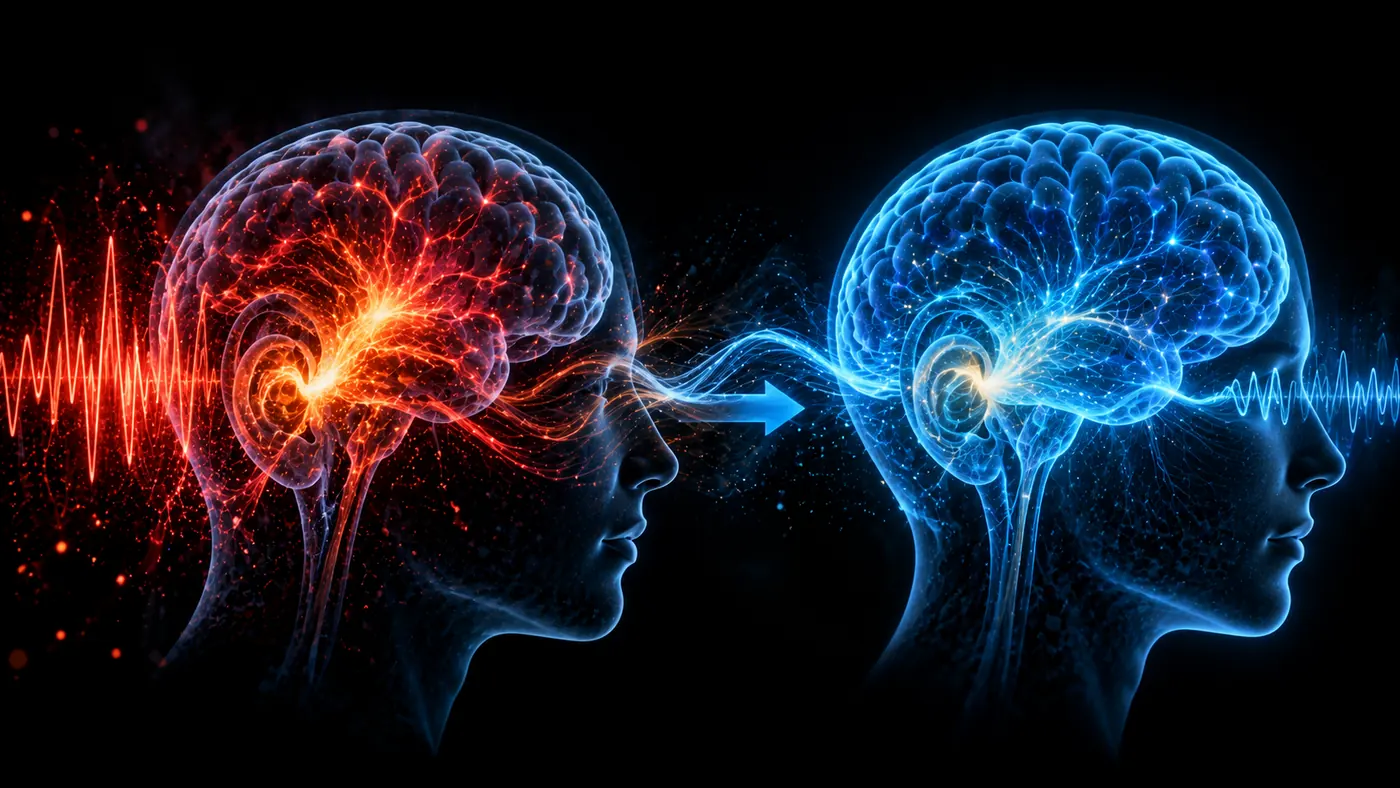
The auditory cortex does not simply go quiet in response. In many cases it appears to compensate for the reduced input by increasing its own spontaneous neural activity — in effect, turning up its own internal "gain" to make up for the missing signal. That compensatory hyperactivity is widely believed to be perceived as the phantom sound of tinnitus. It is the brain's response to an absence of signal, not a sound genuinely present in the environment or even in the ear itself.
The Twist: Tinnitus With a "Normal" Hearing Test
This is where the science has moved forward in a genuinely useful way. A standard hearing test (audiogram) measures the quietest tone you can detect at each frequency — but it does not measure everything happening at the level of the auditory nerve.
A 2023 study published in Scientific Reports, led by researchers including M. Charles Liberman at Massachusetts Eye and Ear, examined 294 people with clinically normal hearing thresholds, split into groups with no tinnitus, intermittent tinnitus, and chronic tinnitus (lasting more than six months). Using a battery of auditory evoked potential and reflex tests that go beyond a standard audiogram, the researchers found that people with chronic tinnitus showed reduced cochlear nerve responses, weaker middle-ear muscle reflexes, and signs of hyperactivity in the central auditory pathway — despite testing as "normal" on conventional hearing tests (see References below).
In plain terms: the study found real, measurable damage to the connection between the ear and the auditory nerve — sometimes called cochlear synaptopathy or "hidden hearing loss" — in people whose hearing test came back clean. The researchers describe a model in which this reduced neural input from a quietly damaged cochlea triggers the same central hyperactivity response responsible for tinnitus, even though the standard clinical test used to screen for hearing loss cannot detect it.
What This Actually Means for Managing Tinnitus
Put together, the honest picture is this: tinnitus is strongly tied to auditory nerve health, whether or not that shows up on a conventional hearing test. That has two practical implications.
Protecting your remaining hearing matters, even with a "clean" test result. Since standard audiograms can miss the kind of cochlear nerve damage linked to tinnitus, consistent use of hearing protection around loud noise — concerts, power tools, motorcycles, loud headphone use — remains one of the few genuinely preventive steps available, regardless of what your last hearing test showed.
Managing the brain's response is a separate, addressable problem from the ear itself. Because tinnitus is understood to be substantially driven by the auditory cortex's hyperactive compensation, not solely by ear damage that can be reversed, sound-based therapy that works with the brain's auditory processing — rather than trying to "fix" the ear — has a genuine mechanistic rationale. This is the approach behind NeuroTinn's binaural beats sound therapy, which targets the neural habituation process directly rather than attempting to repair the underlying hearing damage that may or may not be detectable in the first place.
Key Takeaways
✓ NIDCD data confirms most people with tinnitus have some degree of hearing loss, and noise-induced tinnitus is the most common service-related disability among veterans
✓ The link is not absolute — some people with hearing loss never develop tinnitus at all
✓ A 2023 Scientific Reports study found measurable cochlear nerve damage in people with chronic tinnitus despite normal standard hearing test results — a phenomenon known as hidden hearing loss or cochlear synaptopathy
✓ Tinnitus is believed to result largely from the auditory cortex compensating for reduced signal with its own hyperactivity — a brain response, not just an ear problem
✓ Protecting remaining hearing and addressing the brain's auditory processing (rather than only the ear) are both evidence-supported, complementary strategies
Frequently Asked Questions
If my hearing test is normal, can I still have hearing-related tinnitus?
Yes. Research has found measurable cochlear nerve damage in people with normal standard hearing test results, a phenomenon sometimes called hidden hearing loss. A clean audiogram does not rule out hearing-related tinnitus.
Does treating hearing loss (like with hearing aids) help tinnitus?
Many people report tinnitus becomes less noticeable when hearing aids restore audible sound input, since this can reduce the auditory cortex's compensatory hyperactivity. This varies by individual and is best discussed with an audiologist.
Can tinnitus happen without any hearing loss at all?
Yes. NIDCD notes some people develop tinnitus without measurable hearing loss, and it can also result from other causes, including certain medications, temporomandibular joint (TMJ) issues, or, less commonly, blood vessel conditions. Sudden or one-sided tinnitus should always be evaluated by a doctor.
Will loud noise exposure definitely cause tinnitus?
Not definitely, but it is one of the strongest known risk factors — NIDCD identifies noise-induced tinnitus as the most common service-related disability among veterans, reflecting how consistently loud-noise exposure is tied to tinnitus onset.
Does NeuroTinn treat the hearing damage itself?
No. NeuroTinn is a sound therapy program designed to support the brain's habituation to the tinnitus signal — it does not reverse hearing damage and is not a medical treatment for hearing loss.
Related Guides
→ What Is Tinnitus? Complete Guide to Causes and Relief
→ Why Do I Hear Ringing in My Ears? Causes and Solutions
→ Does Magnesium Help Tinnitus? What the Research Says
→ How to Stop Ringing in Ears Naturally: 7 Methods
→ NeuroTinn Review: Does It Actually Reduce Tinnitus?
→ Pulsatile Tinnitus: What It Means, Causes, and When It's Serious
Medical Disclaimer
This article is educational and does not replace professional medical advice. Sudden-onset, one-sided, or pulsatile tinnitus, or tinnitus accompanied by dizziness or sudden hearing changes, should be evaluated promptly by a qualified healthcare professional, as these patterns can indicate underlying medical conditions requiring attention. Always consult an audiologist or physician for a proper hearing evaluation and personalized tinnitus management plan.
Sharp Brain Lab is an independent editorial platform. We do not diagnose, treat, or cure any medical condition.
TL;DR
- The link: NIDCD confirms most people with tinnitus have some hearing loss, and noise-induced tinnitus is the top service-related disability among veterans
- The exception: some people with hearing loss never develop tinnitus, and some develop tinnitus with a normal hearing test
- The explanation: a 2023 study found hidden cochlear nerve damage in tinnitus patients with normal audiograms — the brain compensates for reduced signal with hyperactivity, perceived as tinnitus
- What helps: protecting remaining hearing plus sound therapy like NeuroTinn that addresses the brain's auditory processing directly
This content is based on information from:
- Official NIDCD (National Institutes of Health) statistics and guidance on tinnitus and hearing loss
- Peer-reviewed research on cochlear neural degeneration in normal-hearing tinnitus patients
Last updated: 10 September 2026
References
1. National Institute on Deafness and Other Communication Disorders (NIDCD). What Is Tinnitus? — Causes and Treatment. National Institutes of Health.
2. Vasilkov V, Caswell-Midwinter B, Zhao Y, de Gruttola V, Jung DH, Liberman MC, Maison SF. (2023). Evidence of cochlear neural degeneration in normal-hearing subjects with tinnitus. Scientific Reports. 13:19870.
recomendado
Sleep Optimization
YuSleep
Recommended for adults who struggle with falling asleep, waking up at 3 AM, or waking up tired even after a full night's sleep. YuSleep combines clinically studied ingredients that support deeper, more restorative sleep without creating dependency.
Brain Supplements
Pineal Guardian X
A premium natural brain health supplement designed to support memory, mental clarity, focus, and long-term cognitive performance with a carefully selected blend of plant-based ingredients.
Brain Audio Programs
Audio Brain Programs
A 7-minute daily audio that uses neuroscience-backed sound frequencies to sharpen focus, boost memory, and unlock your brain's full potential. Used by 80,000+ people worldwide.
Brain Audio Programs
The Memory Wave
A targeted audio program that stimulates your brain's memory center using Theta wave technology. Specifically designed for adults over 40 who want sharper recall and clearer thinking.
Brain Audio Programs
The Genius Switch
Neuroscience-backed audio that activates your brain's peak performance mode in minutes. One of the highest-converting brain programs available — thousands of professionals use it daily.