
Tired After 8 Hours Sleep? Here's Why and How to Fix It
Still tired after 8 hours of sleep? Discover the real neurological reasons why sleep duration isn't enough — and the most effective solutions to wake up genuinely restored.
disclosure This article contains affiliate links. Purchases may earn us a commission at no extra cost to you. We only recommend products we've reviewed.
featured in this review
YuSleep
Recommended for adults who struggle with falling asleep, waking up at 3 AM, or waking up tired even after a full night's sleep. YuSleep combines clinically studied ingredients that support deeper, more restorative sleep without creating dependency.
Tired After 8 Hours of Sleep: Why It Happens and How to Actually Fix It
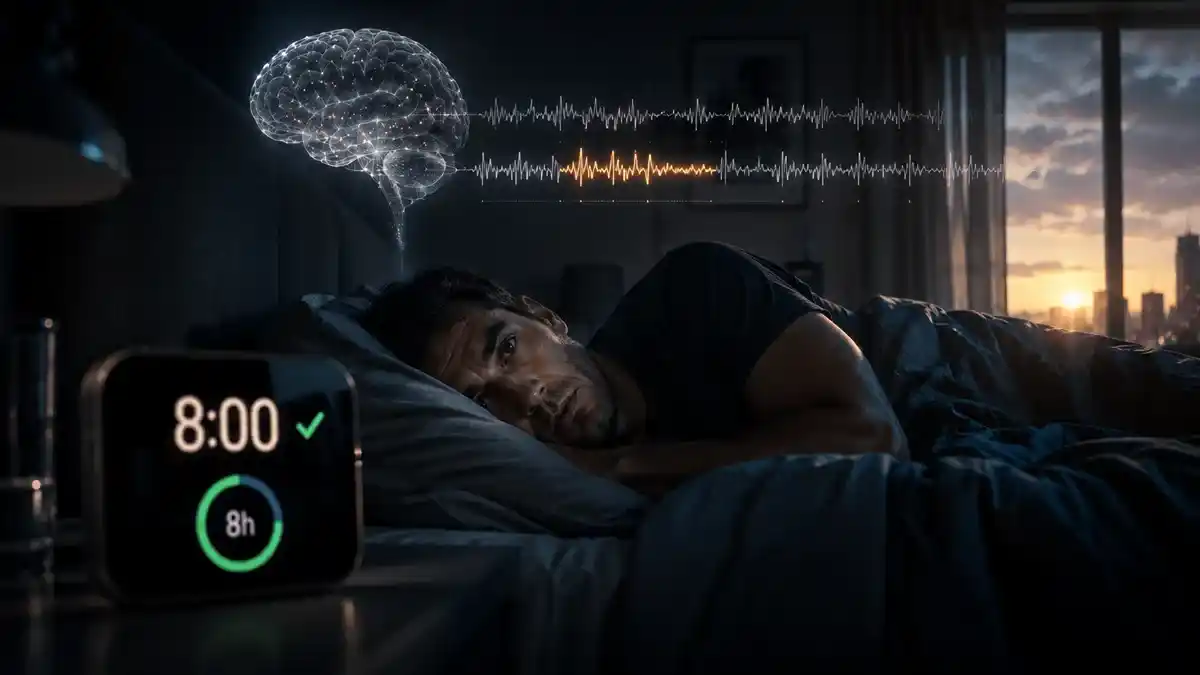
You slept 8 hours last night.
Maybe even 9.
And yet — you woke up exhausted. Groggy. Foggy. As if you had barely slept at all.
You have done everything right by conventional wisdom. You went to bed at a reasonable hour. You slept through the alarm. You gave your body the time it supposedly needs.
And it still wasn't enough.
If this sounds familiar — you are experiencing one of the most common and most misunderstood sleep problems of our time. And it has nothing to do with how long you sleep.
Quick Answer
Why are you tired after 8 hours of sleep?
Feeling tired after adequate sleep duration almost always indicates poor sleep quality — specifically insufficient deep sleep (slow-wave sleep) and REM sleep. The most common causes include elevated nighttime cortisol from chronic stress, alcohol consumption, irregular sleep schedules, sleep apnoea, and nutritional deficiencies that disrupt sleep architecture. Duration alone does not determine how rested you feel — quality of each sleep stage does.
The Difference Between Sleep Duration and Sleep Quality
This is the most important distinction that most sleep advice gets wrong.
Sleep is not a single uniform state. It is a complex biological process that cycles through distinct stages — each serving different and essential functions.
The Four Stages of Sleep
Stage 1 — Light Sleep
The transition from wakefulness. Easily disrupted. Accounts for 5-10% of total sleep.
Stage 2 — Light Sleep
Body temperature drops, heart rate slows. Memory consolidation begins. Accounts for approximately 50% of total sleep.
Stage 3 — Deep Sleep (Slow-Wave Sleep)
The most physically restorative stage. Growth hormone is released. The glymphatic system clears toxic brain waste. Immune function is supported. This is the stage that makes you feel genuinely restored — and the stage most disrupted by stress, alcohol, and irregular schedules.
REM Sleep — Rapid Eye Movement
The dreaming stage. Emotional memory processing, creative thinking, and learning consolidation occur here. Predominates in the final hours of sleep — which is why cutting sleep short disproportionately reduces REM.
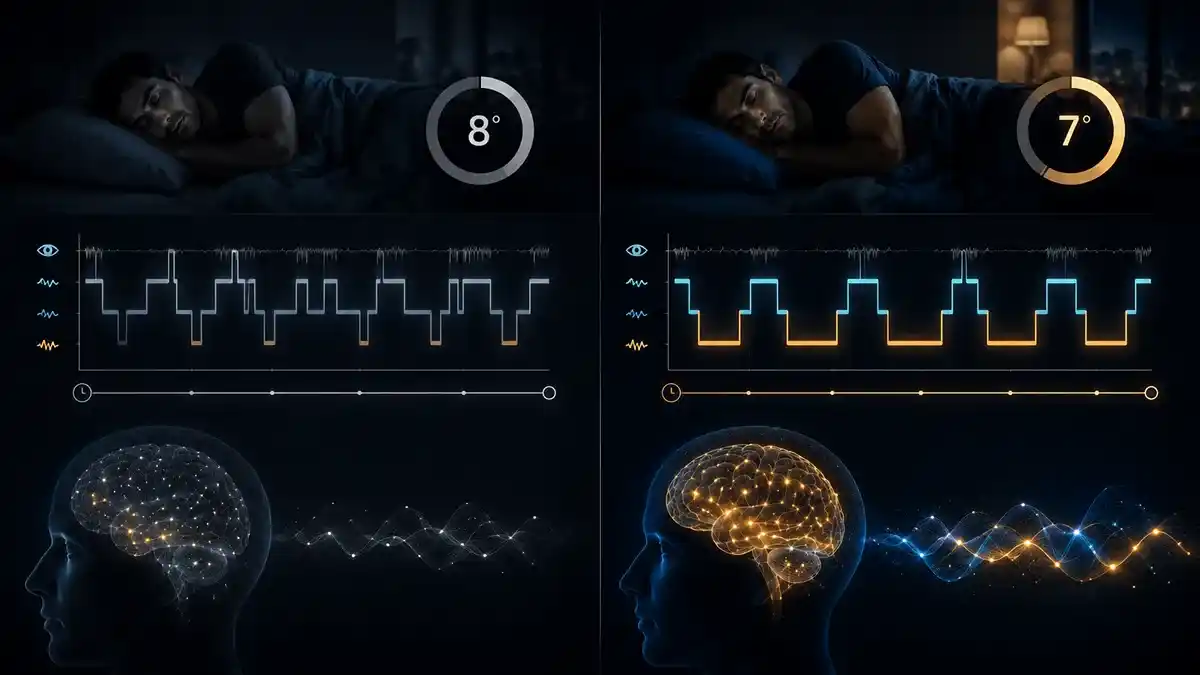
You can spend 8 or 9 hours in bed and get almost none of Stage 3 or REM sleep. And when that happens — you wake up exhausted regardless of how many hours passed.
The 7 Most Common Reasons You Are Tired Despite Adequate Sleep
1. Elevated Nighttime Cortisol — The Most Common Cause
Cortisol — your body's primary stress hormone — follows a natural daily rhythm. It should be lowest during sleep and rise gradually in the early morning to support waking alertness.
In people experiencing chronic stress — professional pressure, financial worry, relationship difficulties, health anxiety — this rhythm is disrupted. Cortisol remains elevated through the night, preventing the brain from entering and sustaining deep sleep stages.
The result is a night spent predominantly in light sleep — hours in bed, but almost no restorative Stage 3 or REM sleep. Eight hours of light sleep is not equivalent to 8 hours of properly cycled sleep. It does not restore the brain or body in the same way.
Signs this is your cause: worse after high-stress periods, racing thoughts at night, difficulty falling or staying asleep, waking between 2-4 AM.
2. Alcohol — The Sleep Quality Destroyer
This is perhaps the single most common and most misunderstood cause of unrefreshing sleep.
Alcohol produces faster sleep onset — which is why many people use it to "wind down." But it dramatically disrupts sleep architecture in the second half of the night:
- Suppresses REM sleep — reducing the emotional processing and memory consolidation that REM provides
- Reduces deep slow-wave sleep in the second half of the night
- Causes sleep fragmentation — multiple brief awakenings that the sleeper may not remember
- Produces a rebound cortisol spike as it is metabolised — typically 3-4 hours after consumption
The result is a night that feels like sleep but is not restorative. If you regularly drink alcohol in the evening and regularly wake up tired despite adequate hours — alcohol is almost certainly the primary cause.
Signs this is your cause: regular evening alcohol consumption, vivid or disturbing dreams, waking between 2-4 AM, morning headaches.
3. Sleep Apnoea — Frequently Undiagnosed
Sleep apnoea — the repeated brief cessation of breathing during sleep — affects an estimated 1 billion people globally and is dramatically underdiagnosed.
Each apnoea event causes a micro-awakening as the brain rouses itself to restore breathing. These micro-awakenings — which the sleeper typically does not remember — prevent the sustained deep sleep that restoration requires. Someone experiencing 30 apnoea events per hour is technically waking 30 times per hour — regardless of what their sleep duration appears to be.
Signs this is your cause: loud snoring, witnessed breathing pauses, waking with dry mouth or headache, excessive daytime sleepiness, partner reports of snoring or gasping. Medical assessment and treatment are essential if sleep apnoea is suspected.
4. Poor Sleep Architecture From Irregular Schedules
The brain's sleep architecture — the cycling between sleep stages in appropriate proportions — depends on circadian rhythm consistency. Irregular sleep and wake times disrupt this architecture, reducing the efficiency of each sleep stage even when total duration is adequate.
Weekend "sleep ins" — sleeping significantly longer than on weekdays — are particularly disruptive. They shift the circadian clock in a pattern similar to mild jet lag, reducing sleep quality for the subsequent weeknight sleep.
Signs this is your cause: variable bedtimes and wake times, weekend sleep significantly longer than weekdays, Monday morning fatigue disproportionate to weekend activity.
5. Nutritional Deficiencies Affecting Sleep Quality
Several nutritional deficiencies directly impair sleep architecture — and are common even in apparently well-nourished adults:
Magnesium deficiency — magnesium is essential for GABA receptor function, the primary inhibitory neurotransmitter that promotes sleep. Deficiency is directly linked to reduced deep sleep and increased nighttime cortisol. Studies consistently show that magnesium supplementation improves deep sleep quality and subjective sleep restoration.
Vitamin D deficiency — vitamin D receptors are present throughout the brain including in sleep-regulating regions. Deficiency is associated with disrupted sleep architecture and increased daytime fatigue despite adequate sleep hours.
B vitamin deficiencies — particularly B6 and B12, which are directly involved in melatonin synthesis and sleep regulation.
Signs this is your cause: persistent fatigue despite adequate sleep and lifestyle factors, muscle cramps or restless legs, low mood, reduced daytime energy.
6. Screen Use and Blue Light Before Sleep
Blue light from screens — phones, tablets, computers — suppresses melatonin production and delays sleep onset. But the more insidious effect is on sleep architecture: even when sleep onset eventually occurs, the melatonin disruption reduces the depth and quality of subsequent sleep stages.
The brain that falls asleep after 90 minutes of screen use does not enter deep sleep with the same efficiency as a brain that has had 90 minutes of dim, screen-free transition time.
Signs this is your cause: regular screen use until shortly before bed, difficulty falling asleep, sleeping "enough" hours but waking feeling unrested.
7. Underlying Health Conditions
Several health conditions can cause unrefreshing sleep despite adequate duration — including thyroid disorders (particularly hypothyroidism), anaemia, depression, chronic fatigue syndrome, and fibromyalgia. If unrefreshing sleep is severe, persistent, and unresponsive to lifestyle interventions — medical assessment is appropriate.
The Most Effective Solutions for Unrefreshing Sleep
Solution 1 — Address Cortisol at the Source
For stress-driven sleep quality problems — the most common cause — managing nighttime cortisol is the highest-priority intervention.
Natural compounds that support healthy nighttime cortisol levels:
Lemon Balm Extract — directly reduces cortisol through its effects on the HPA axis. Multiple clinical studies demonstrate reductions in stress markers and improvements in sleep quality with Lemon Balm supplementation.
Ashwagandha KSM-66 — one of the most evidence-backed adaptogens for cortisol reduction. Multiple double-blind trials demonstrate significant reductions in cortisol and improvements in sleep quality.
L-Theanine — promotes Alpha brain wave activity that bridges the gap between wakefulness and sleep, reducing the cognitive arousal that elevated cortisol produces.
GABA — quiets the overactive nervous system that chronic stress produces, supporting the transition into and maintenance of deep sleep stages.
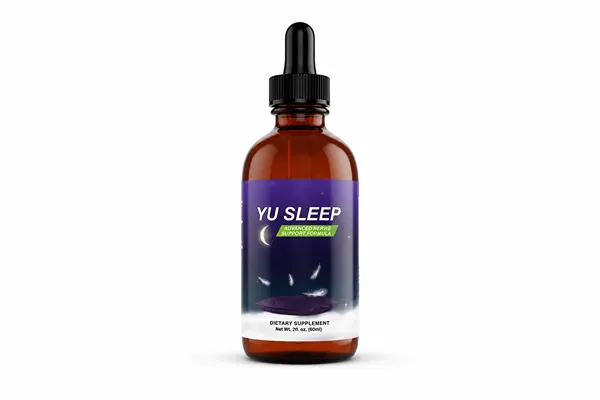
These four compounds — alongside Magnesium Glycinate, micro-dose Melatonin (0.9mg), 5-HTP, Red Tart Cherry Extract, Apigenin, and Vitamins B6 and B2 — form the complete formula of YuSleep, a natural sleep supplement specifically designed to address the biological causes of unrefreshing sleep.
Unlike standard sleep supplements that simply sedate, YuSleep supports the natural sleep architecture that genuine restoration depends on — helping the brain spend more time in the deep and REM sleep stages where physical and cognitive recovery actually occurs.
If your sleep duration is adequate but your restoration is not — you may find that addressing sleep quality rather than quantity is the missing piece.
Solution 2 — Eliminate Alcohol Before Sleep
If you consume alcohol regularly in the evening — this is the highest-priority single intervention for improving sleep quality.
Eliminating alcohol within 4 hours of sleep typically produces noticeable improvements in morning restoration within 3-5 nights — often more rapidly than any supplement or sleep technique.
This is not about giving up alcohol permanently. It is about understanding that evening alcohol and restorative sleep are biologically incompatible — and making an informed choice about the trade-off.
Solution 3 — Establish Circadian Consistency
A consistent wake time — maintained regardless of when you fell asleep, including weekends — is the single most evidence-backed intervention for improving sleep architecture and sleep quality over time.
The consistency of the wake time anchors the circadian clock, optimises the natural build-up of sleep pressure through the day, and progressively improves the efficiency and depth of subsequent sleep cycles.
What to implement:
- Set a consistent wake time and maintain it for 21 days
- Resist weekend sleep-ins longer than 30-60 minutes beyond your weekday wake time
- Morning natural light exposure within 60 minutes of waking anchors the circadian rhythm
Solution 4 — Optimise Your Sleep Architecture Nutritionally
Addressing the nutritional deficiencies most commonly linked to poor sleep architecture:
Magnesium Glycinate — 300-400mg taken 30-60 minutes before sleep. The most bioavailable form with the strongest evidence for deep sleep improvement. Supports GABA activity and reduces nighttime cortisol.
Vitamin D — ensure adequate status through blood testing, particularly at northern latitudes during winter months. Supplement at appropriate doses if deficient.
B vitamins — B6 and B12 specifically support melatonin synthesis and sleep regulation. Found in YuSleep's formula alongside the other compounds above.
Solution 5 — Create a Genuine Pre-Sleep Transition
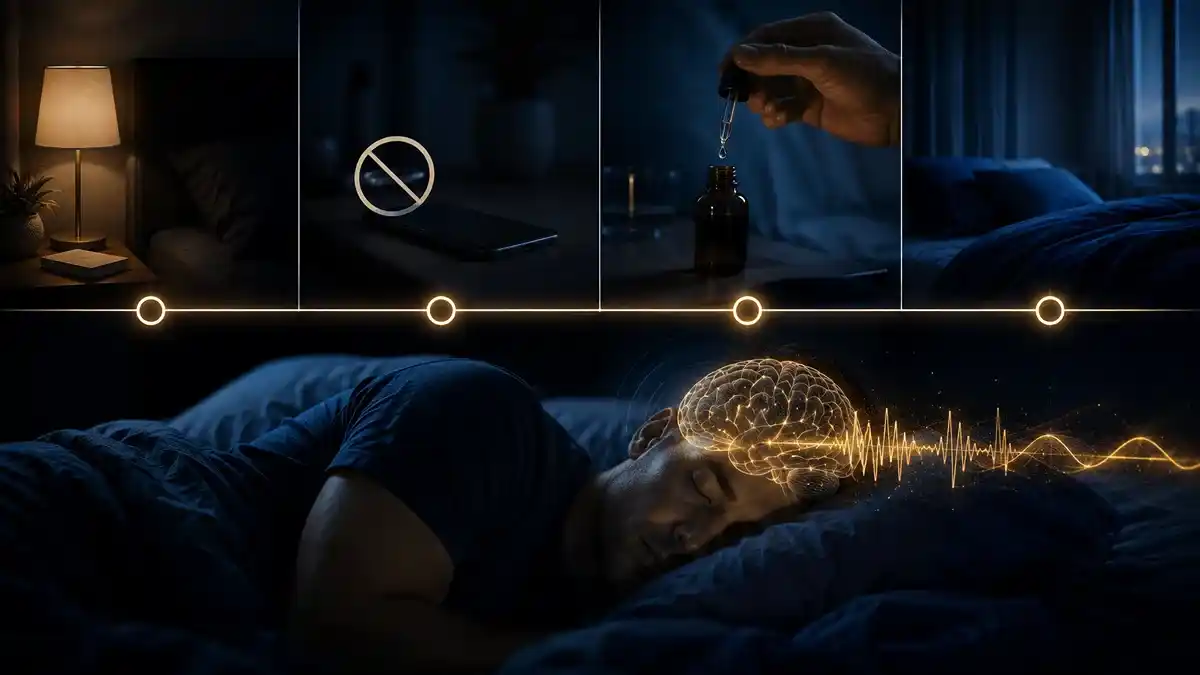
The brain does not switch instantaneously from wakefulness to deep sleep. It requires a transition period — typically 60-90 minutes of gradually reducing arousal — to enter sleep with optimal architecture.
An effective pre-sleep protocol:
- Dim lights 90 minutes before target sleep time
- No screens or screen-free mode from 60 minutes before bed
- Pre-sleep writing: 5 minutes capturing tomorrow's priorities — offloading active working memory
- YuSleep 2 droppers 30 minutes before bed
- Cool bedroom to 16-19°C
- Consistent sleep time following the consistent wake time established above
Key Takeaways
✓ Feeling tired after 8 hours of sleep indicates poor sleep quality — specifically insufficient deep sleep and REM sleep — not insufficient duration
✓ The most common causes are elevated nighttime cortisol from chronic stress, alcohol disruption of sleep architecture, and nutritional deficiencies
✓ Sleep duration and sleep quality are fundamentally different — 6 hours of properly cycled sleep often restores better than 9 hours of fragmented light sleep
✓ YuSleep addresses sleep quality at the biological level — supporting deep sleep architecture through natural cortisol reduction and nervous system calming
✓ The most immediately impactful single intervention is eliminating alcohol within 4 hours of sleep
✓ Consistent wake time is the most evidence-backed long-term sleep architecture intervention available
If your sleep challenges appear related to poor sleep quality rather than insufficient duration — you may find that addressing the biological causes of sleep architecture disruption produces better results than simply spending more time in bed.
YuSleep is formulated to support deep, restorative sleep quality — not just sleep onset. You may also find our complete guide on how to sleep better for brain health useful alongside the interventions described here.
Frequently Asked Questions
Why am I tired after 8 hours of sleep?
Feeling tired after adequate sleep duration almost always indicates insufficient deep sleep and REM sleep. The most common causes include stress-elevated cortisol disrupting sleep architecture, alcohol suppressing deep sleep, irregular sleep schedules reducing sleep efficiency, and nutritional deficiencies impairing sleep quality.
Is 8 hours of sleep always enough?
Duration alone does not determine restoration. Eight hours of fragmented light sleep may be significantly less restorative than 7 hours of properly cycled deep and REM sleep. Sleep quality — specifically the proportion of deep slow-wave sleep and REM sleep — determines how rested you feel on waking.
Can stress cause tiredness despite adequate sleep?
Yes — significantly. Chronic stress elevates cortisol levels that remain elevated through the night, preventing the brain from entering and sustaining deep sleep stages. The result is hours in bed without restorative sleep architecture.
Does alcohol affect sleep quality?
Profoundly. Alcohol suppresses REM sleep, reduces deep slow-wave sleep in the second half of the night, causes sleep fragmentation, and produces a cortisol rebound that disrupts sleep architecture even when total sleep hours appear adequate.
What supplement helps with sleep quality?
Natural formulas that address sleep architecture rather than simply inducing sedation are most effective for unrefreshing sleep. YuSleep combines Lemon Balm, GABA, L-Theanine, Magnesium Glycinate, and micro-dose Melatonin to support the deep sleep stages where genuine restoration occurs.
When should I see a doctor about unrefreshing sleep?
If unrefreshing sleep is accompanied by loud snoring, witnessed breathing pauses, gasping during sleep, or excessive daytime sleepiness — medical assessment for sleep apnoea is important. Persistent unrefreshing sleep unresponsive to lifestyle interventions also warrants medical evaluation.
Related Guides
→ Why You Wake Up at 3 AM — Causes and Solutions
→ How to Sleep Better for Brain Health — Complete Guide
→ YuSleep Review — Honest Independent Review
→ Mental Exhaustion — Causes and Recovery Guide
→ Brain Fog: Causes, Symptoms and Natural Solutions
Medical Disclaimer
This article is educational and does not replace professional medical advice. Persistent unrefreshing sleep — particularly when accompanied by loud snoring, witnessed breathing pauses, or excessive daytime sleepiness — requires evaluation by a qualified healthcare professional. Always consult your doctor before beginning any new supplement regimen.
TL;DR
- Main cause: Insufficient deep sleep and REM sleep despite adequate total duration — most commonly caused by elevated nighttime cortisol, alcohol, or irregular sleep schedules
- Main solution: Address sleep quality rather than quantity — through cortisol management, alcohol elimination, circadian consistency, and natural sleep architecture support with YuSleep
- When to seek medical help: Snoring, gasping, witnessed breathing pauses, or persistent unrefreshing sleep unresponsive to lifestyle intervention
- Next step: Eliminate evening alcohol for 5 nights and add YuSleep — assess sleep quality improvement within the first week
This content is based on information from:
- PubMed peer-reviewed sleep research
- NIH National Institute of Neurological Disorders and Stroke
- American Academy of Sleep Medicine (AASM) guidelines
- Sleep Foundation educational resources
- Neuroscience research on sleep architecture and cortisol
Last updated: 23 July 2026
References
1. Besedovsky L, Lange T, Haack M. (2019). The Sleep-Immune Crosstalk in Health and Disease. Physiol Rev. 99(3):1325-1380.
2. Kolla BP, Mansukhani MP, Schneekloth T. (2011). Pharmacological treatment of insomnia in alcohol recovery. J Addict Med. 5(1):9-13.
3. Abbasi B, et al. (2012). The effect of magnesium supplementation on primary insomnia in elderly. J Res Med Sci. 17(12):1161-9.
4. Hidese S, et al. (2019). Effects of L-Theanine on Stress-Related Symptoms and Cognitive Functions. Nutrients. 11(10):2362.
5. Ngan A, Conduit R. (2011). Effects of Passiflora incarnata on subjective sleep quality. Phytother Res. 25(8):1153-9.
recomendado
Brain Audio Programs
Audio Brain Programs
A 7-minute daily audio that uses neuroscience-backed sound frequencies to sharpen focus, boost memory, and unlock your brain's full potential. Used by 80,000+ people worldwide.
Brain Audio Programs
The Memory Wave
A targeted audio program that stimulates your brain's memory center using Theta wave technology. Specifically designed for adults over 40 who want sharper recall and clearer thinking.
Brain Supplements
Pineal Guardian X
A premium natural brain health supplement designed to support memory, mental clarity, focus, and long-term cognitive performance with a carefully selected blend of plant-based ingredients.
Brain Audio Programs
The Genius Switch
Neuroscience-backed audio that activates your brain's peak performance mode in minutes. One of the highest-converting brain programs available — thousands of professionals use it daily.
Tinnitus Relief
NeuroTinn
Natural sound therapy program designed to help reduce tinnitus perception, promote relaxation, and improve sleep without medication.