
Do Hearing Aids Help Tinnitus? What the Research Actually Shows
Your audiologist mentioned hearing aids for your tinnitus, not your hearing. Here's why that makes sense, who it actually helps, and where it falls short.
disclosure This article contains affiliate links. Purchases may earn us a commission at no extra cost to you. We only recommend products we've reviewed.
featured in this review
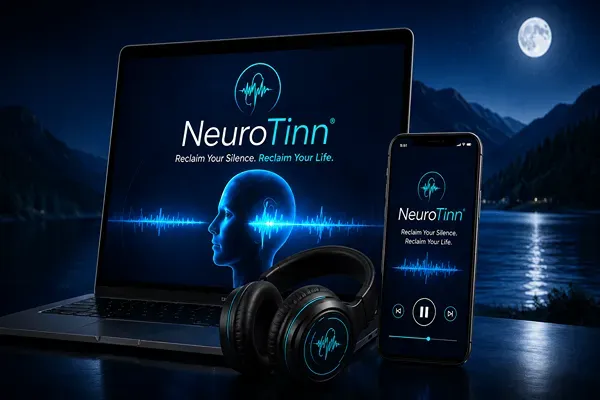
NeuroTinn
Natural sound therapy program designed to help reduce tinnitus perception, promote relaxation, and improve sleep without medication.
Here's a conversation that confuses a lot of people: you go to an audiologist about the ringing in your ears, and instead of a pill or a procedure, they suggest hearing aids. You didn't think you had a hearing problem — you have a ringing problem. So why is the recommended fix a device built to make things louder?
It's a fair question, and the answer isn't obvious until you understand what's actually happening between your ears — not in them.
The Short Answer
Yes, for a specific and very common group of people: those whose tinnitus is connected to some degree of hearing loss. The National Institute on Deafness and Other Communication Disorders (NIDCD) lists hearing aids as "one of the main treatment options for people with tinnitus who have hearing loss," and roughly 90% of tinnitus cases occur alongside measurable hearing loss (see References below). That overlap is exactly why hearing aids are usually the first thing an audiologist reaches for.
Hearing aids don't cure tinnitus, and nobody credible claims they do. What the evidence actually suggests is more modest and more useful: for the right person, they make the ringing meaningfully less intrusive — and for some, it fades into the background almost entirely.
Why Hearing Aids Can Help Tinnitus
The logic isn't "louder sound drowns out the ringing," even though that's part of it. There are a few distinct mechanisms at work, and understanding them explains why hearing aids help some people dramatically and others barely at all.
Restoring the missing signal. When hearing loss reduces the input reaching your auditory nerve, the brain's auditory cortex often compensates by turning up its own internal activity — and that compensatory hyperactivity is widely believed to be what you perceive as tinnitus. Amplifying real external sound gives the auditory system genuine input to work with again, which can reduce that compensatory signal over time.
Masking. Many modern hearing aids include built-in tinnitus-masking features — white noise, nature sounds, or gentle tonal signals layered under normal amplification — that make the phantom sound less noticeable without adding a separate device.
Less silence, less focus on the ringing. Tinnitus is almost always worse in quiet environments, because there's nothing else competing for auditory attention. Restoring ambient sound — conversations, background noise, the ordinary texture of a room — gives the brain something else to process.
The research backing this isn't a single study or a marketing claim. A 2025 review in Seminars in Hearing examined 58 studies on hearing aid-based tinnitus therapy published between 2013 and 2024. Every one of them reported improvement to some degree. Tinnitus severity scores (measured with standard clinical tools) improved substantially more in treatment groups than in controls, and in the individual studies that tracked it, 67–82% of patients reported clinically meaningful improvement depending on device type, with one study finding 76% had habituated to their tinnitus within 30 days of consistent hearing aid use (see References below). A separate, frequently cited estimate puts the share of supportive studies at roughly two-thirds of the literature reviewed.
That's a meaningfully high hit rate for a device that wasn't originally designed to treat tinnitus at all.
Who Is Most Likely to Benefit
Here's the part most people miss: hearing aids aren't a general-purpose tinnitus treatment. They work through hearing restoration, so their effectiveness tracks closely with whether hearing loss is actually part of your picture.
You're in the group most likely to see real benefit if:
- You have mild to moderate hearing loss confirmed by a hearing test, alongside persistent tinnitus
- You notice you struggle to follow conversation in quiet rooms, or you've started avoiding group settings because of hearing difficulty
- Your tinnitus is fairly constant rather than sharply intermittent or one-sided
Relief isn't always immediate. Some people notice a difference within days; for others, it takes weeks or a few months of consistent daily use before the brain's auditory processing adapts.
Where Hearing Aids Fall Short
This is the part that gets left out of a lot of "do hearing aids help tinnitus" content, and it matters.
Hearing aids are unlikely to help — or may not be an appropriate first step — if:
- Your hearing tests as normal. If there's no hearing loss to correct, there's nothing for the device to amplify, which removes the main mechanism that makes hearing aids effective.
- Your tinnitus stems from structural or neurological causes rather than sensorineural hearing loss — for example, TMJ dysfunction, certain medications, or vascular issues.
- Your tinnitus is pulsatile (rhythmic, in time with your heartbeat), sudden-onset, or strictly one-sided. These patterns need a medical workup before anything else, hearing aids included.
It's also worth being honest about the practical side: prescription hearing aids that include tinnitus-masking features are a real financial commitment, typically running from several hundred to a few thousand dollars depending on the technology level and whether insurance covers any of it. The FDA's 2022 rule allowing over-the-counter hearing aids for adults with self-perceived mild-to-moderate hearing loss has lowered that barrier for some people — but OTC devices are self-fitted, don't require a hearing evaluation, and aren't built for more severe hearing loss (see References below). They're a reasonable starting point for some people and the wrong tool for others.

When to See an Audiologist
If you haven't had a hearing test yet, that's the actual first step — not buying a device of any kind. An audiologist can measure exactly how much hearing loss you have, at which frequencies, and evaluate your tinnitus alongside it. NIDCD specifically recommends this evaluation before pursuing treatment, and for certain red-flag patterns — pulsatile tinnitus, sudden onset, one-sided ringing, or tinnitus paired with dizziness or sudden hearing changes — a referral to an ear, nose, and throat (ENT) physician is warranted to rule out underlying medical causes first.
This isn't a box-ticking formality. Whether hearing aids are the right tool for your specific tinnitus depends entirely on what that evaluation finds.
Where Sound Therapy Like NeuroTinn Fits In
It's worth being precise about this, because the two get conflated online: NeuroTinn is not a hearing aid, doesn't amplify sound, and isn't a substitute for a hearing evaluation or a prescribed hearing aid when one is medically indicated.
What NeuroTinn is designed to do is different: it's a sound therapy program aimed at supporting the brain's habituation process — helping the auditory system get used to the tinnitus signal so it becomes less intrusive day to day. That's a complementary approach, not a competing one. Someone using properly fitted hearing aids for hearing-loss-related tinnitus can still use sound-based habituation support alongside them; the two address different parts of the picture (restoring auditory input versus training the brain's response to the phantom signal).
If a hearing evaluation shows no significant hearing loss, or if cost or access makes hearing aids impractical right now, sound therapy is a reasonable place to start — with the understanding that it manages the perception of tinnitus rather than treating an underlying hearing deficit.
Frequently Asked Questions
Will hearing aids get rid of my tinnitus completely?
Rarely completely, but often substantially. Reviews of the research show most studies report meaningful improvement, and some patients report their tinnitus becomes barely noticeable — but "cure" isn't the right expectation to set. Think reduction and habituation, not elimination.
What if my hearing test comes back normal but I still have tinnitus?
Then hearing aids likely aren't the right first tool, since there's no hearing loss for them to correct. Your audiologist or ENT can help identify other contributing factors, and sound-based habituation therapy may be more relevant to your situation.
How long does it take to notice a difference?
It varies. Some people notice change within days of starting to wear hearing aids consistently; for others, meaningful improvement takes several weeks to a few months as the auditory system adjusts.
Are over-the-counter hearing aids good enough for tinnitus?
They can help some people with self-perceived mild-to-moderate hearing loss, but they're self-fitted and not designed for more significant hearing loss. If your tinnitus is persistent, a professional hearing evaluation first will tell you whether OTC devices are actually appropriate for your degree of hearing loss.
Can I use NeuroTinn instead of getting a hearing evaluation?
No — sound therapy isn't a substitute for diagnosis. If you have persistent tinnitus, especially with any hearing difficulty, seeing an audiologist first is the right starting point. Sound therapy can be a useful complement afterward, regardless of what that evaluation finds.
Related Guides
→ What Is Tinnitus? Complete Guide to Causes and Relief
→ Tinnitus and Hearing Loss: Is There a Connection?
→ Why Do I Hear Ringing in My Ears? Causes and Solutions
→ How to Stop Ringing in Ears Naturally: 7 Methods
→ NeuroTinn Review: Does It Actually Reduce Tinnitus?
Medical Disclaimer
This article is educational and does not replace professional medical advice. It is not a substitute for a hearing evaluation, an audiologist's assessment, or a prescribed hearing aid when one is clinically indicated. Pulsatile, sudden-onset, or one-sided tinnitus, or tinnitus accompanied by dizziness or sudden hearing changes, should be evaluated promptly by a qualified healthcare professional.
Sharp Brain Lab is an independent editorial platform. We do not diagnose, treat, or cure any medical condition.
This content is based on information from:
- Official NIDCD (National Institutes of Health) guidance on tinnitus, hearing aids, and OTC hearing aid regulation
- A 2025 peer-reviewed review of hearing aid-based tinnitus therapy research (2013–2024)
Last updated: 30 September 2026
References
1. National Institute on Deafness and Other Communication Disorders (NIDCD). What Is Tinnitus? — Causes and Treatment. National Institutes of Health.
2. National Institute on Deafness and Other Communication Disorders (NIDCD). Over-the-Counter (OTC) Hearing Aids. National Institutes of Health, 2022 FDA rule summary.
3. Vajsakovic D, Teng A, Searchfield GD. (2025). A Review of Auditory Rehabilitation Uses in Hearing Aid-Based Therapy for Tinnitus (2013–2024). Seminars in Hearing. 45(3-4):306-316.
recomendado
Sleep Optimization
YuSleep
Recommended for adults who struggle with falling asleep, waking up at 3 AM, or waking up tired even after a full night's sleep. YuSleep combines clinically studied ingredients that support deeper, more restorative sleep without creating dependency.
Brain Supplements
Pineal Guardian X
A premium natural brain health supplement designed to support memory, mental clarity, focus, and long-term cognitive performance with a carefully selected blend of plant-based ingredients.
Brain Audio Programs
Audio Brain Programs
A 7-minute daily audio that uses neuroscience-backed sound frequencies to sharpen focus, boost memory, and unlock your brain's full potential. Used by 80,000+ people worldwide.
Brain Audio Programs
The Memory Wave
A targeted audio program that stimulates your brain's memory center using Theta wave technology. Specifically designed for adults over 40 who want sharper recall and clearer thinking.
Brain Audio Programs
The Genius Switch
Neuroscience-backed audio that activates your brain's peak performance mode in minutes. One of the highest-converting brain programs available — thousands of professionals use it daily.