
How to Fall Asleep Fast: Techniques That Actually Work Tonight
Lying awake watching the minutes pass? These are the specific, evidence-based techniques for falling asleep faster — not vague advice, actual methods you can use tonight.
disclosure This article contains affiliate links. Purchases may earn us a commission at no extra cost to you. We only recommend products we've reviewed.
featured in this review
YuSleep
Recommended for adults who struggle with falling asleep, waking up at 3 AM, or waking up tired even after a full night's sleep. YuSleep combines clinically studied ingredients that support deeper, more restorative sleep without creating dependency.
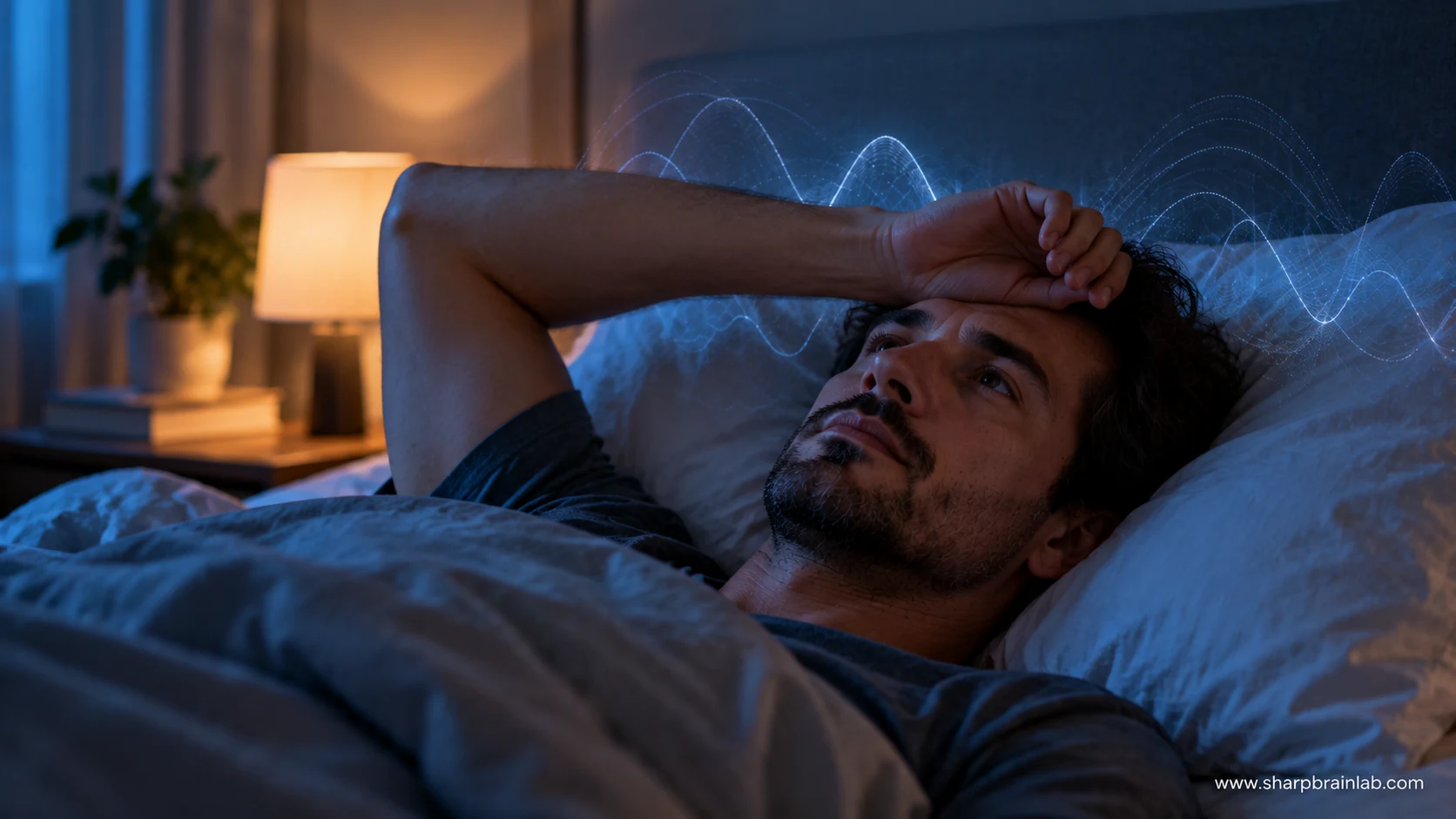
It's 11:47 PM. You've been lying still for twenty minutes, doing the math on how many hours of sleep you'll get if you fall asleep right now — which of course guarantees you won't. Your body is tired. Your brain isn't cooperating.
If that's tonight, here's what actually helps — not "avoid screens and drink chamomile tea" advice you've heard a hundred times, but specific techniques with something behind them.
Why You Can't Just "Decide" to Fall Asleep
This is worth understanding for thirty seconds because it explains why most of what follows works.
Falling asleep isn't a decision — it's a physiological state your body drops into once two conditions are met: your nervous system shifts out of alert mode (parasympathetic activation, if you want the term), and your mind stops actively generating thoughts that require attention. Trying to "force" sleep does the opposite of both. It keeps your prefrontal cortex — the planning, reasoning part of your brain — engaged, which is precisely the part that needs to quiet down for sleep onset to happen.
Every technique below works by targeting one or both of those two levers: calming the nervous system, or giving your mind something to do that isn't planning, worrying, or scrolling through the day.
The Military Method and Progressive Muscle Relaxation
The so-called "military method" is one of the most widely repeated fast-sleep techniques online, popularized through an account — not rigorously documented, worth saying plainly — of pilots being trained to fall asleep in around two minutes under stressful conditions. Whatever its exact origin, the technique itself overlaps heavily with progressive muscle relaxation, which does have real research support for reducing physical tension and aiding sleep onset.
Here's how to do it:
1. Relax the muscles in your face, including your jaw and the muscles around your eyes
2. Drop your shoulders as low as they'll go, then relax your upper and lower arms, one side at a time
3. Exhale, relaxing your chest
4. Relax your legs, working from thighs down to your feet
5. Once your body feels loose, clear your mind for ten seconds by picturing a calm, still scene — or, if your mind won't stay blank, try repeating "don't think" to yourself for ten seconds
The mechanism that's genuinely evidence-backed here isn't the two-minute claim specifically — it's progressive muscle relaxation itself, which works by deliberately releasing physical tension you're often not aware you're holding, which in turn reduces the physiological arousal keeping you awake.
4-7-8 Breathing
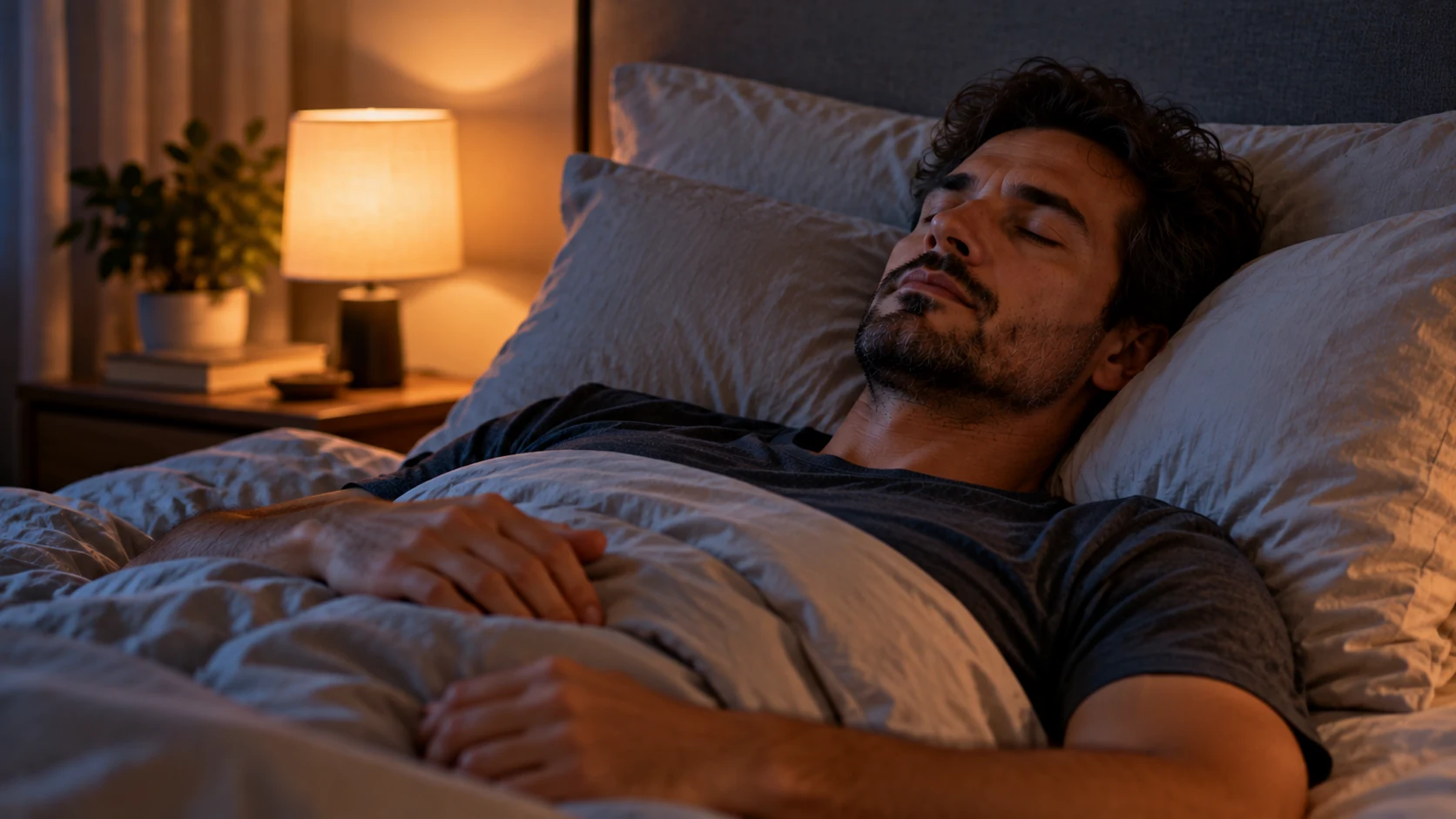
This one is simple enough to do without thinking, which is the point.
- Exhale completely through your mouth
- Inhale quietly through your nose for 4 seconds
- Hold your breath for 7 seconds
- Exhale completely through your mouth for 8 seconds, making a soft whoosh sound
- Repeat for four full cycles
The technique is adapted from pranayama, a centuries-old yogic breathing practice, and the reason it's worth trying isn't tradition — it's that extending your exhale relative to your inhale directly activates the parasympathetic nervous system, the "rest and digest" state that's the physiological opposite of the alertness keeping you awake. Unlike some sleep techniques, this one has a clear, mechanistic reason to work, even without a large body of sleep-specific clinical trials behind the exact protocol.
Get Your Room Actually Right
Before any technique, the environment has to cooperate. This part isn't glamorous, but it's the highest-leverage thing most people skip.
- Temperature: Somewhere between 60–67°F (16–19°C) is the range most consistently associated with easier sleep onset. Too warm is a more common problem than too cold.
- Darkness: Even small amounts of light — a charging cable LED, streetlight through a gap in the curtains — can interfere with the sleep-onset process. Blackout curtains or a sleep mask address this directly.
- Sound: Either full quiet or a consistent, unchanging sound (a fan, white noise) works better than intermittent noise, which keeps the brain in a low-level monitoring state.
If Your Mind Won't Stop Racing
This is usually the real obstacle — not the body, the mind. Two techniques address this specifically:
Guided imagery. Deliberately construct a detailed, calm mental scene — not just "a beach," but the specific temperature of the sand, the sound of the water, the smell of the air. The detail matters because it occupies the same mental bandwidth that would otherwise be spent on tomorrow's to-do list.
Paradoxical intention. Counterintuitively, deliberately trying to stay awake — rather than trying to fall asleep — can reduce the performance pressure and anxiety around sleep that often makes falling asleep harder in the first place. Some sleep researchers view this as one of the more interesting findings in the field, precisely because it works against the instinct to "try harder."
If racing thoughts are about tomorrow specifically — a meeting, a decision, a deadline — writing them down for five minutes before getting into bed (not in bed) offloads them from active working memory in a way that thinking about them repeatedly doesn't.
What to Do If You've Been Awake for 20 Minutes
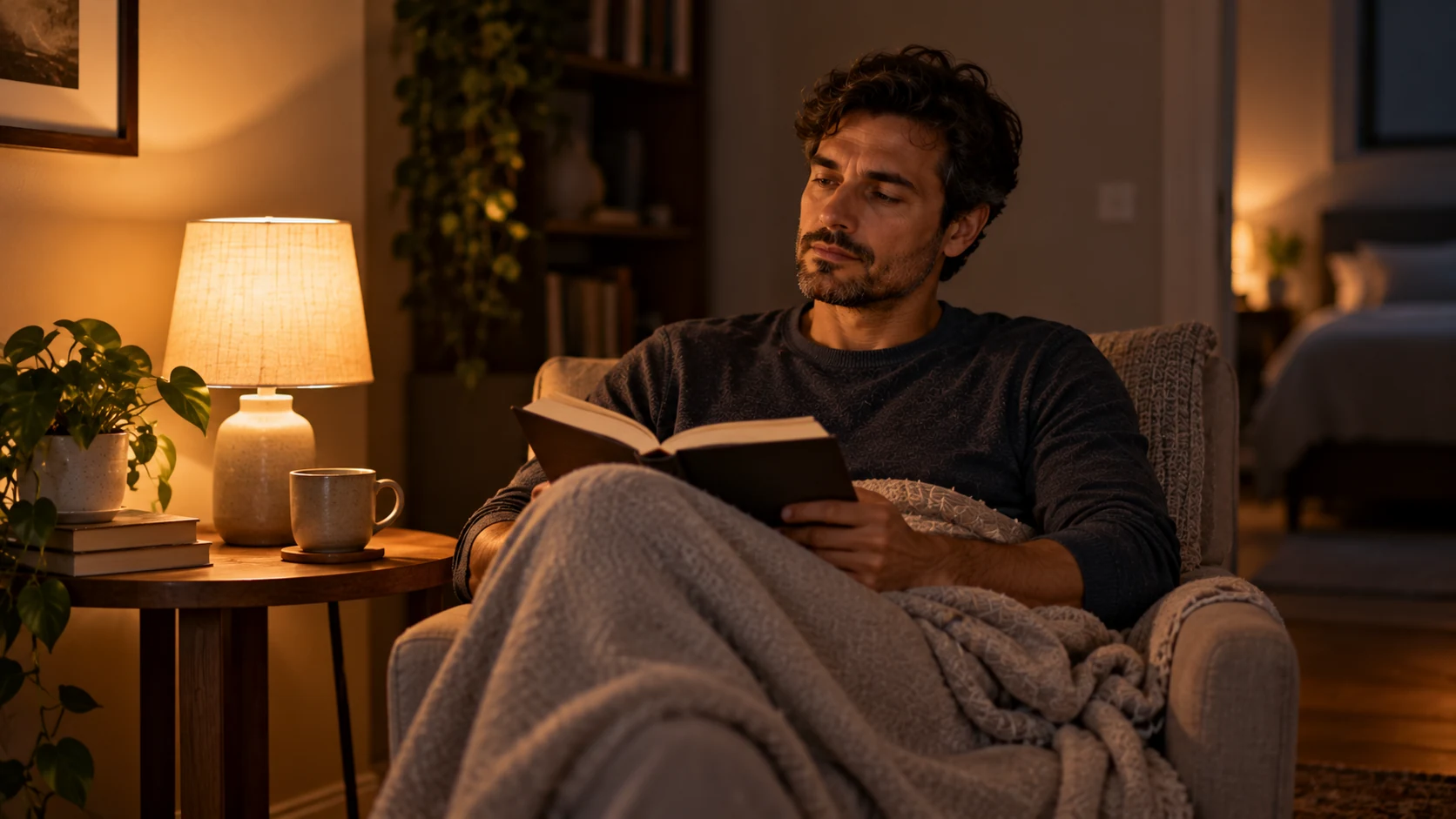
Don't keep trying. Lying in bed awake and frustrated trains your brain to associate the bed with wakefulness rather than sleep — the opposite of what you want. If you've been lying awake for roughly 20 minutes, get up, go to another room, and do something calm and low-stimulation in dim light — no phone, no bright screens — until you feel genuinely sleepy, then go back to bed. This is a core principle of stimulus control, one of the better-established behavioral approaches in sleep research.
When Occasional Trouble Falling Asleep May Need More Support
Everything above is aimed at occasional difficulty falling asleep — the kind most people deal with sometimes, especially during stressful periods. If you're consistently taking more than 30 minutes to fall asleep, most nights, for a month or more, that pattern starts to look more like chronic insomnia, and the right next step is different: cognitive behavioral therapy for insomnia (CBT-I) is the treatment recommended as first-line therapy for chronic insomnia by physician groups, and it's worth discussing with a doctor rather than relying solely on nightly techniques.
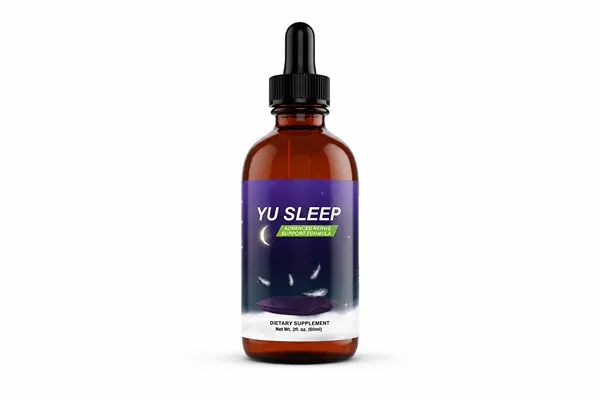
For occasional difficulty getting your mind and body to settle at bedtime, some people find nutritional support useful alongside the techniques above. YuSleep combines ingredients like magnesium glycinate, L-theanine, and lemon balm extract — compounds associated with calm and reduced nighttime arousal — into a formula aimed at supporting the body's own transition into sleep. It's positioned as a complement to good sleep habits, not a replacement for addressing chronic insomnia through proper evaluation and treatment, and it isn't a substitute for CBT-I if that's what a diagnosis actually calls for.
Frequently Asked Questions
What's the fastest way to fall asleep?
There's no single universal fastest method — what works varies by person and by what's actually keeping you awake (physical tension, a racing mind, or environment). Progressive muscle relaxation and 4-7-8 breathing are two of the more consistently useful starting points because they directly target physiological arousal.
Does the military method really work in two minutes?
The specific two-minute timeline isn't rigorously documented, but the underlying technique overlaps with progressive muscle relaxation, which does have genuine research support for aiding sleep onset. Treat the two-minute claim skeptically; treat the relaxation technique itself as worth trying.
Why does my mind race more the moment I try to sleep?
Without daytime distractions competing for attention, unresolved thoughts and mild anxieties become more noticeable at bedtime. This is normal, not a sign of a sleep disorder — though if it happens every night and prevents sleep for 30+ minutes consistently, it's worth mentioning to a doctor.
Should I just get up if I can't sleep?
Yes, after about 20 minutes of being awake. Staying in bed frustrated trains your brain to associate the bed with wakefulness. Get up, do something calm in dim light, and return when you feel sleepy.
Will YuSleep help me fall asleep faster tonight?
It's formulated with ingredients associated with calm and reduced nighttime arousal, and some people notice a difference the first night. It's designed as a complement to the techniques above, not a replacement for them — and it's not intended as a treatment for diagnosed chronic insomnia.
Related Guides
→ Why You Wake Up at 3 AM: Causes and Solutions
→ Best Natural Sleep Supplements 2026: What Works
→ Tired After 8 Hours Sleep? Here's Why and How to Fix It
→ Deep Sleep vs REM Sleep: How Each Stage Affects Memory
→ YuSleep Review: Does This Sleep Formula Work?
Medical Disclaimer
This article is educational and does not replace professional medical advice. It does not diagnose or treat insomnia or any sleep disorder. If you consistently struggle to fall asleep for more than 30 minutes most nights over a period of weeks, or experience loud snoring, gasping during sleep, or excessive daytime sleepiness, consult a physician or sleep specialist.
Sharp Brain Lab is an independent editorial platform. We do not diagnose, treat, or cure any medical condition.
This content is based on information from:
- Sleep Foundation guidance on evidence-based techniques for falling asleep faster
- General clinical guidance on stimulus control and cognitive behavioral therapy for insomnia (CBT-I) as first-line treatment for chronic insomnia
Last updated: 30 September 2026
References
1. Sleep Foundation. How to Fall Asleep Fast: Science-Backed Tips for Better Sleep.
recomendado
Brain Audio Programs
Audio Brain Programs
A 7-minute daily audio that uses neuroscience-backed sound frequencies to sharpen focus, boost memory, and unlock your brain's full potential. Used by 80,000+ people worldwide.
Brain Audio Programs
The Memory Wave
A targeted audio program that stimulates your brain's memory center using Theta wave technology. Specifically designed for adults over 40 who want sharper recall and clearer thinking.
Brain Audio Programs
The Genius Switch
Neuroscience-backed audio that activates your brain's peak performance mode in minutes. One of the highest-converting brain programs available — thousands of professionals use it daily.
Brain Supplements
Pineal Guardian X
A premium natural brain health supplement designed to support memory, mental clarity, focus, and long-term cognitive performance with a carefully selected blend of plant-based ingredients.
Tinnitus Relief
NeuroTinn
Natural sound therapy program designed to help reduce tinnitus perception, promote relaxation, and improve sleep without medication.